
 by ASPIRE-AT Programme
From Traditional Farming to Market-Oriented Net House Production: A Best Practice from Svay Rieng Province
Best Practice Story
“Growing vegetables in a net house is low-cost, time-saving and profitable.”
Before this transition, Buntheun relied on traditional subsistence farming to meet his family’s daily needs. In 2018, seeing growing market demand, he shifted to open-field vegetable production on 15,000 square metres, cultivating scallions and cucumbers. But the move brought major constraints. Limited access to improved cultivation methods, pest outbreaks, climate-related shocks, high labour and pesticide costs, and unstable markets kept returns low. Despite considerable effort, his monthly profit ranged from only 110,000 riels to 1,000,000 riels.
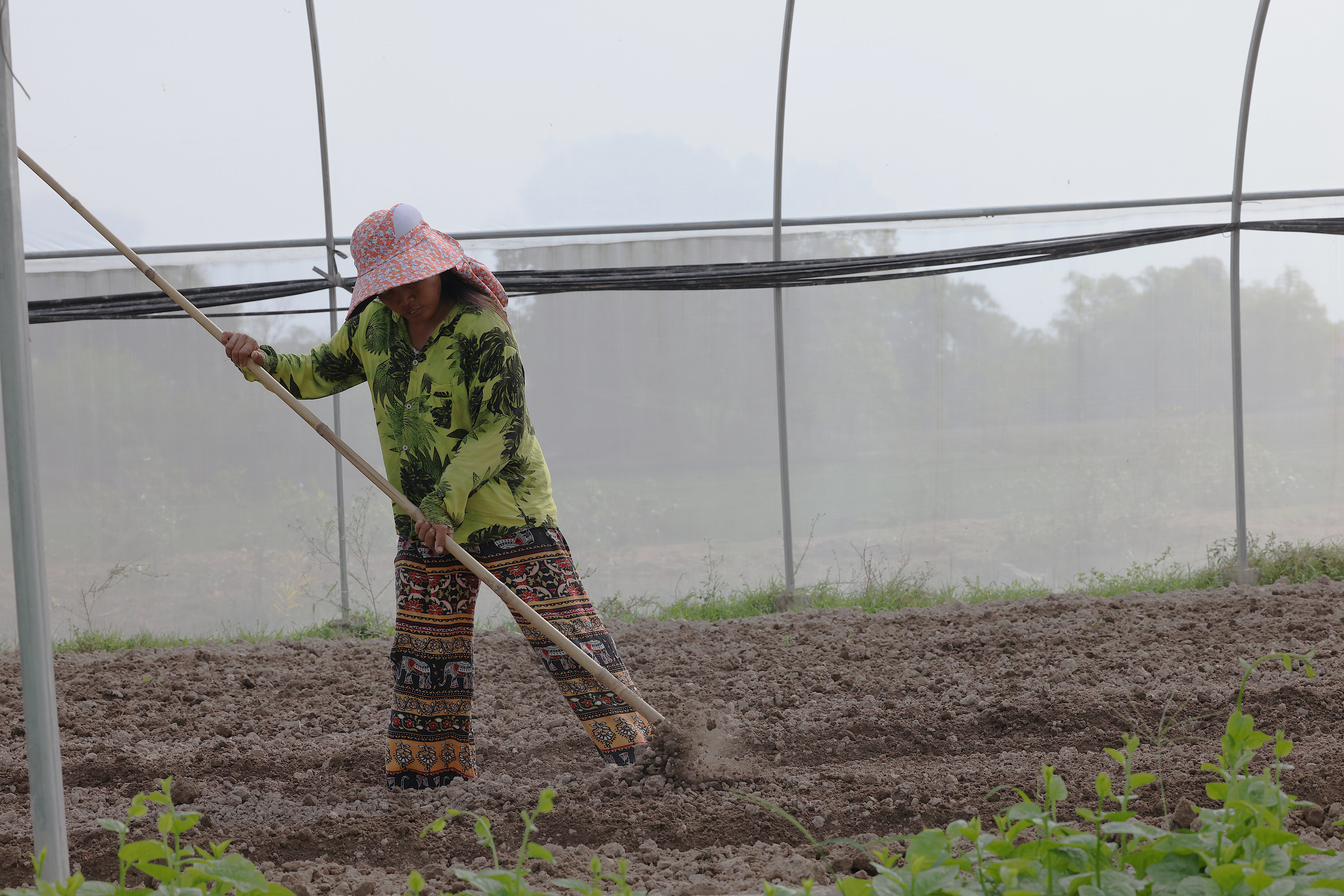
The turning point came in 2019, when the Svay Rieng Provincial Department of Agriculture, Forestry and Fisheries selected him to lead a vegetable production business cluster of 25 families, including 8 women-headed households, under IFAD’s ASPIRE programme. Through this support, he received technical training in improved cultivation practices and production planning based on market demand. He also received one net house measuring 10 metres by 20 metres, equipped with drip irrigation and solar energy.
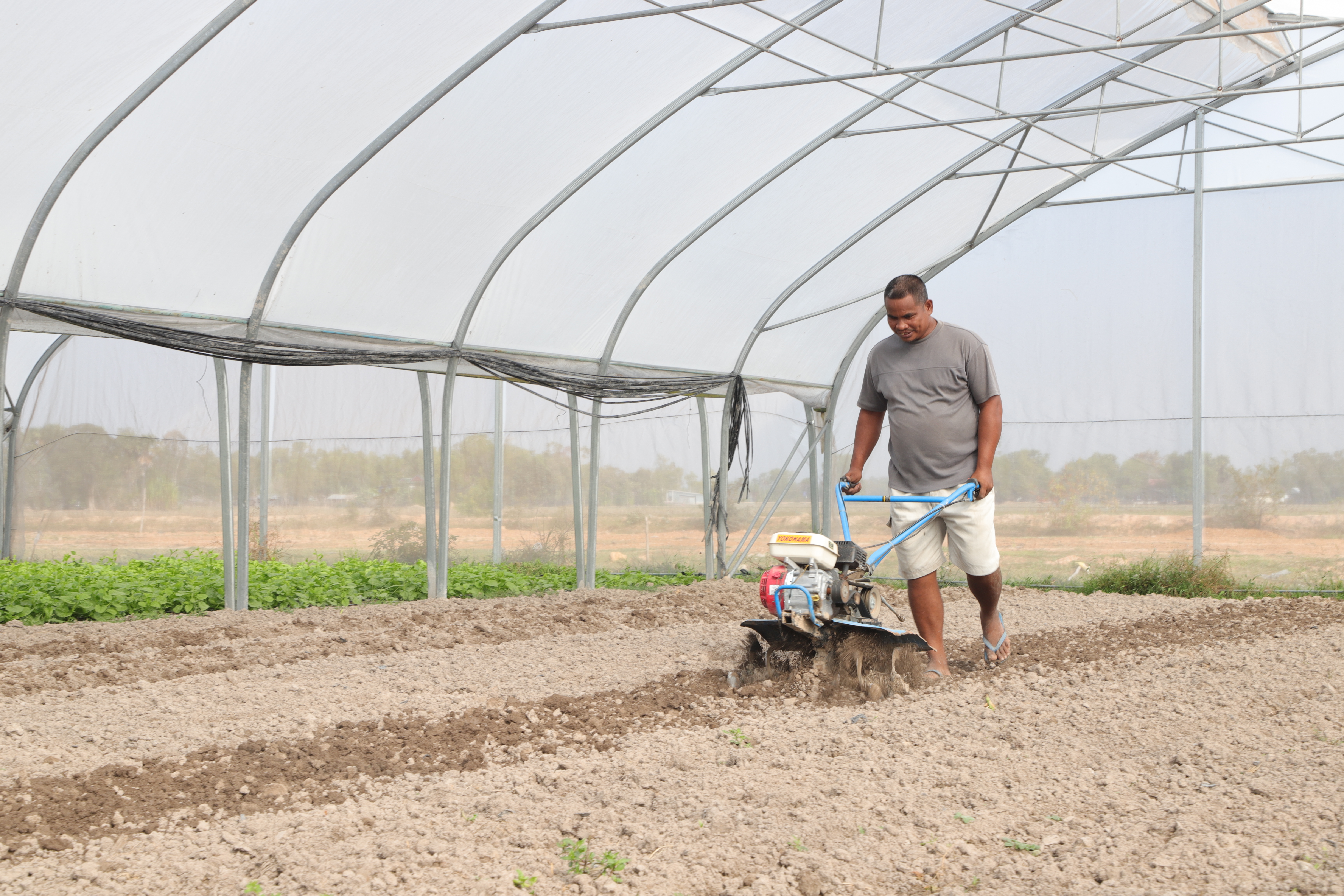
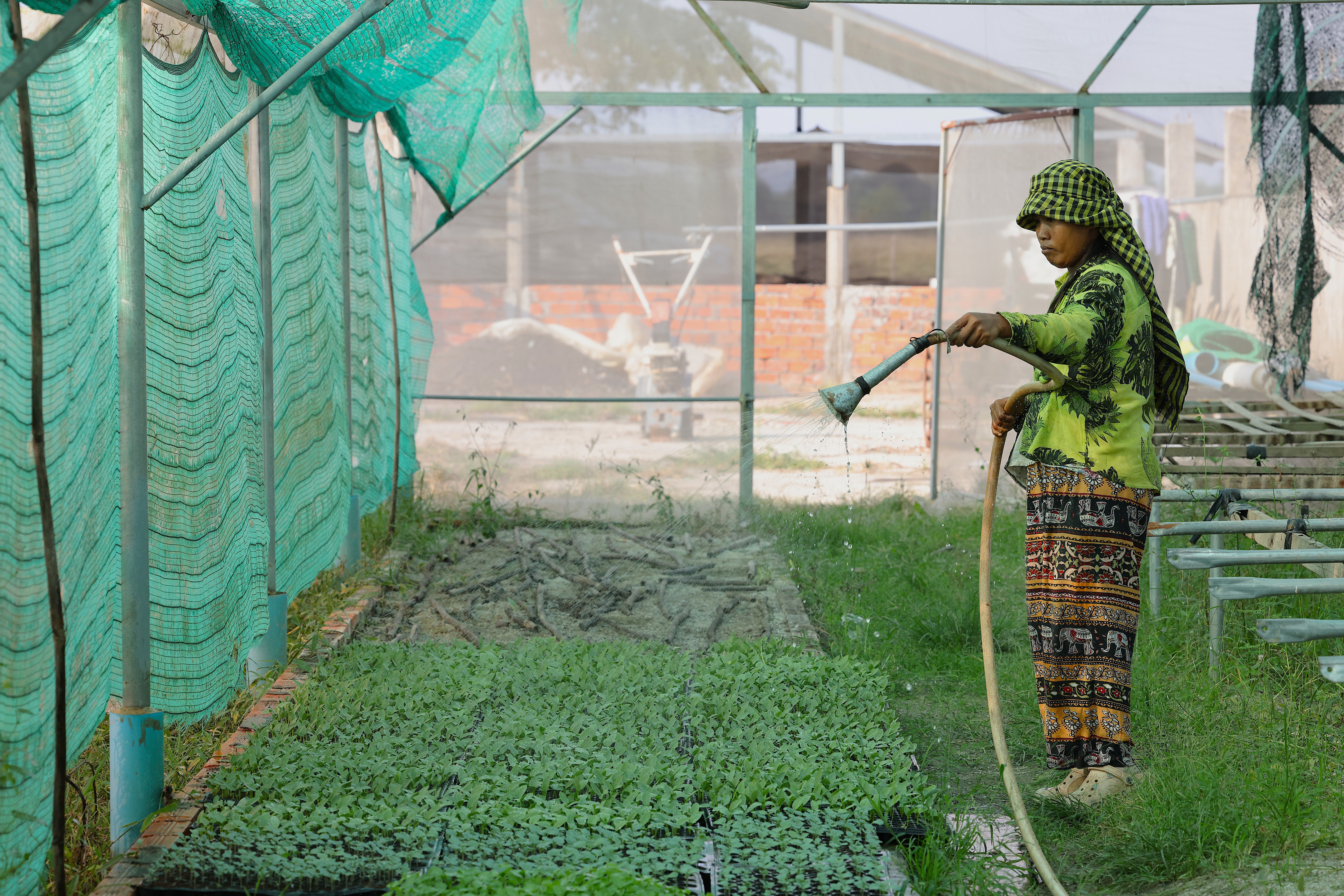
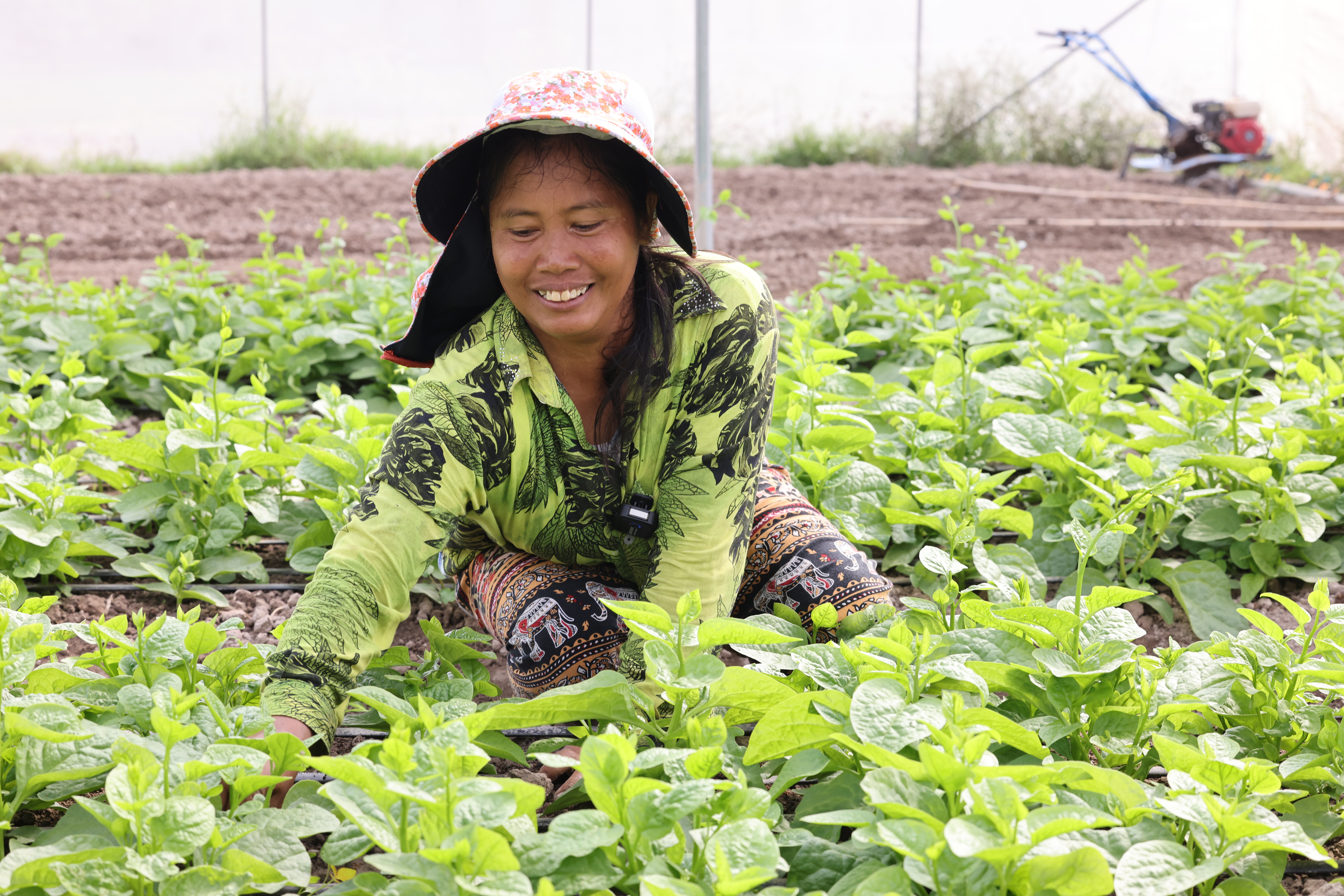
This support addressed more than production alone. It introduced a more business-oriented farming model. Net house production reduced labour requirements, lowered dependence on pesticides, improved crop management and made it possible to produce throughout the year, with up to eight harvests annually. Encouraged by the results, Buntheun expanded to two net houses by 2020.
Under ASPIRE-AT in 2023–2024, this progress moved to a new level. His cluster was further strengthened and formalized into the Svay Thom Village Vegetable Development Agricultural Community, with Buntheun serving as president. The community now has 85 members, including 32 women. This organizational strengthening is important because IFAD guidance emphasizes that farmer organizations become more effective when they can provide services, organize production, strengthen governance and improve members’ market access through more structured business models.
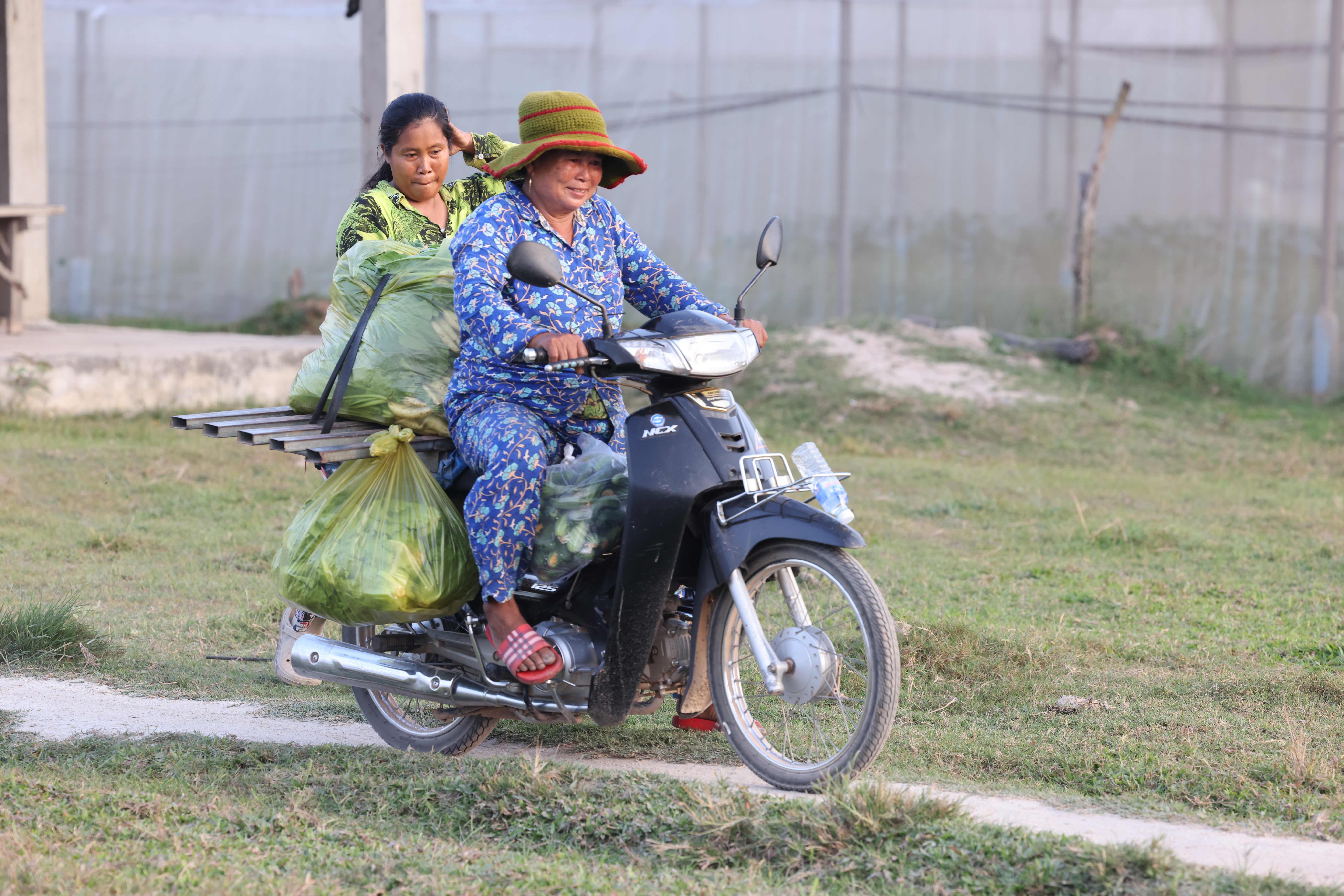
With ASPIRE-AT support, Buntheun also joined the Farmer-to-Farmer Knowledge Sharing Programme in Siem Reap, where he learned more about climate-resilient production techniques. He later participated in the Vegetable and Backyard Chicken Value Chain Actor Forum in Takeo, which helped him exchange experience on quality control, production challenges and market requirements. These efforts helped create more stable buyer relationships and formal production agreements, reducing market uncertainty and supporting more predictable prices and supply volumes.
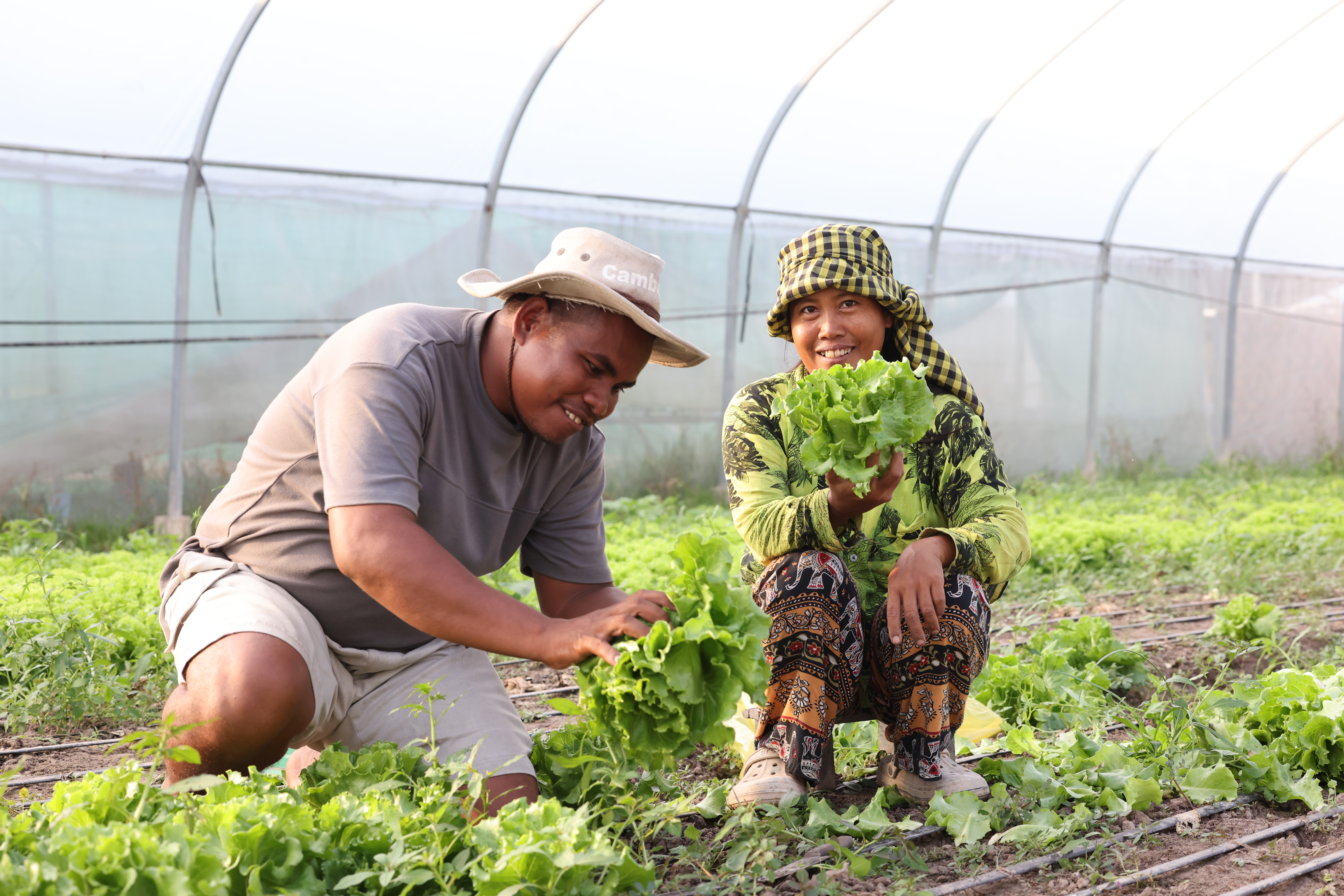
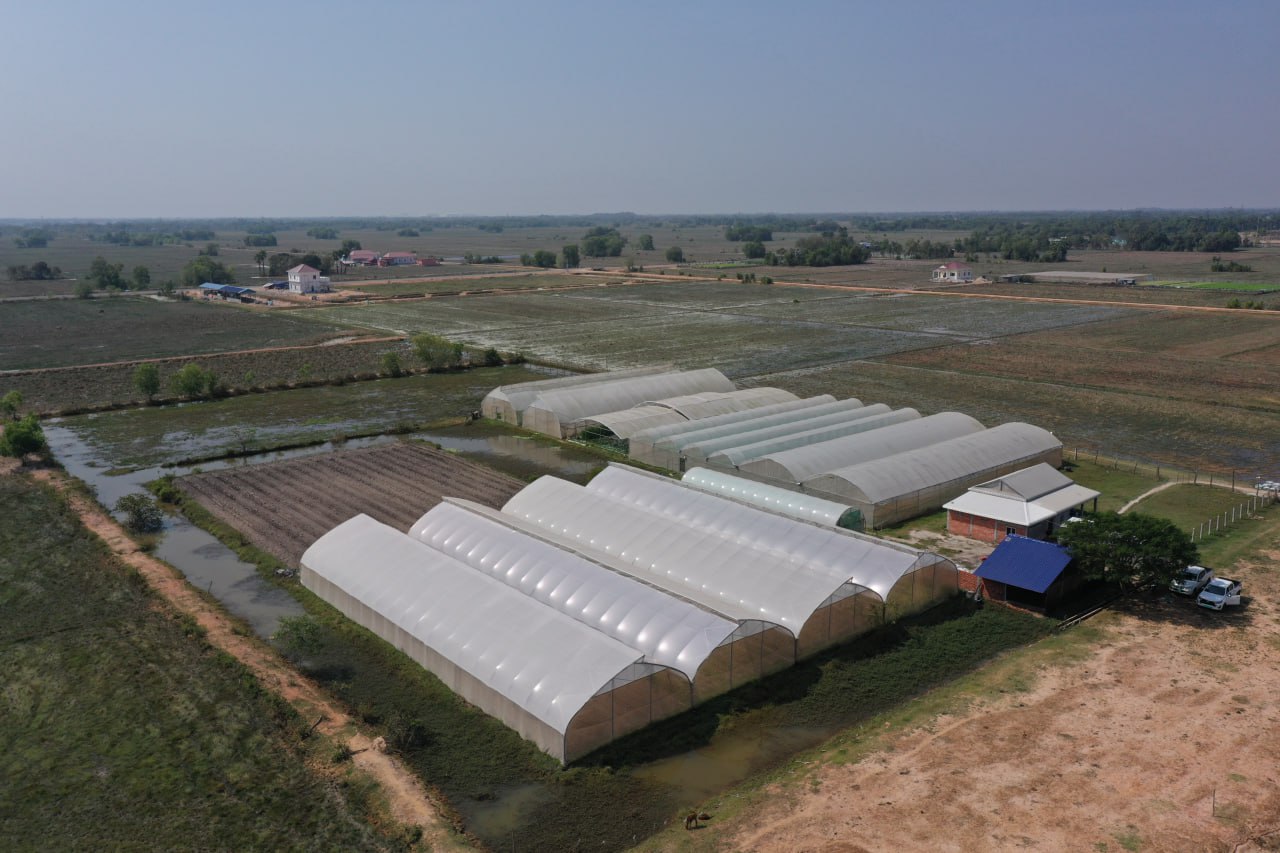
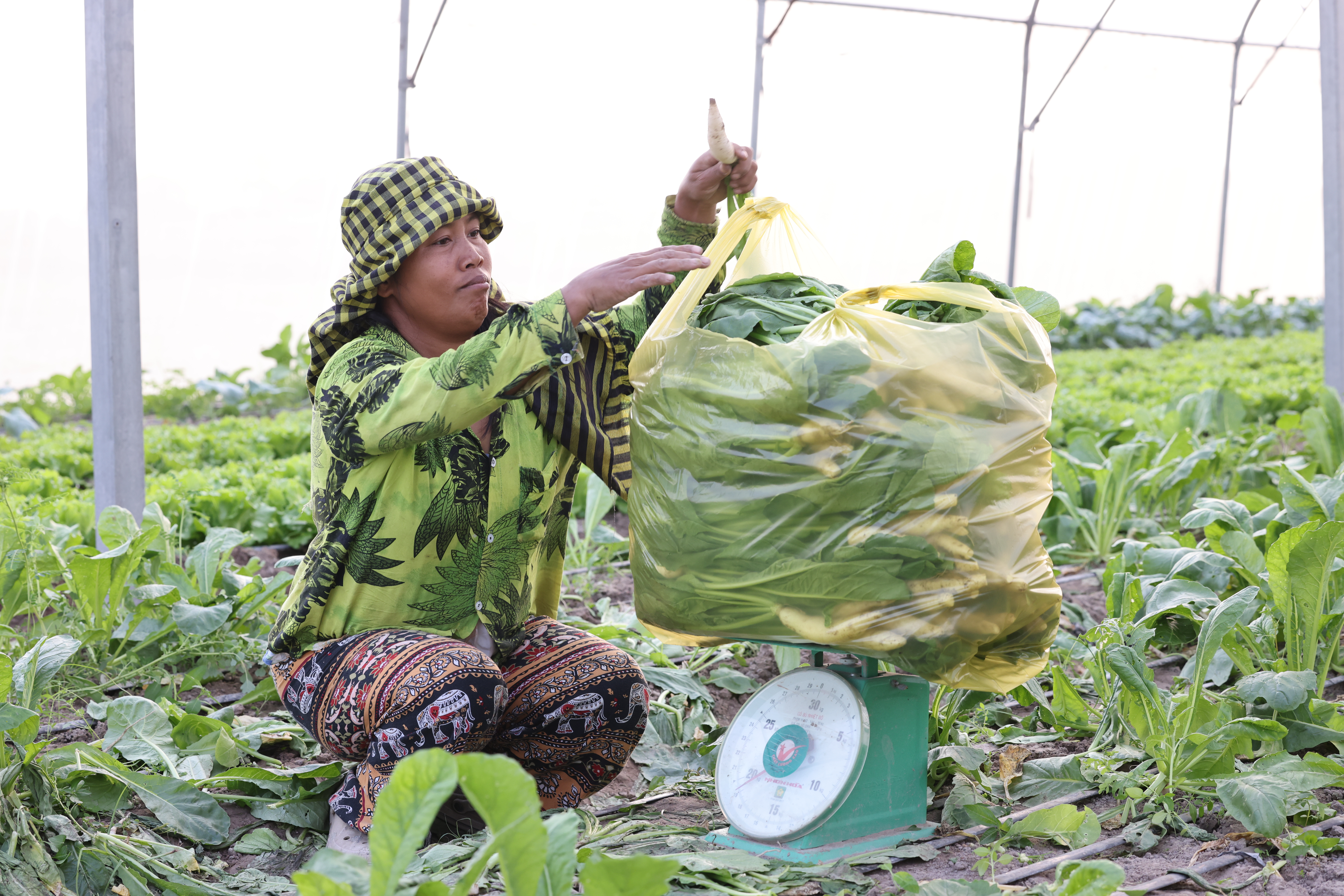
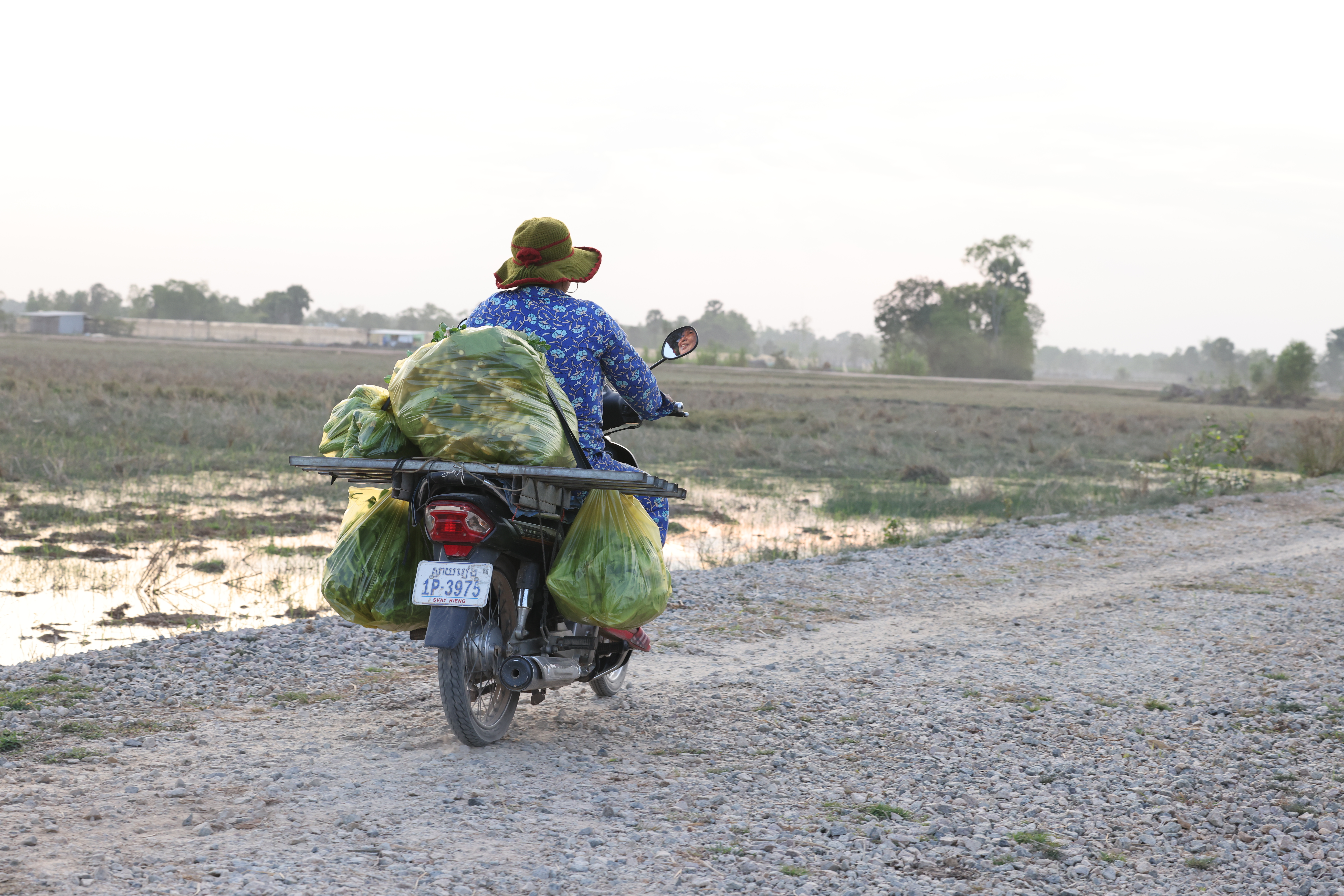
To respond to growing market demand for quality, consistency and quantity, Buntheun expanded further, building four additional net houses in 2024 and another four in 2025. He now operates a total of 11 net houses, each measuring 10 metres by 20 metres. Today, he supplies around 130 to 150 kilograms of safe vegetables per day to the market and earns an average net profit of 10,000,000 riels per month.
His case shows that the shift from traditional production to protected cultivation becomes more effective when several elements come together: appropriate technology, practical extension support, strong farmer organization, learning opportunities, and reliable market linkages. This aligns closely with IFAD guidance that sustainable rural smallholder gains are strongest when support combines production services, value addition, marketing, business planning and institutional strengthening, rather than treating them separately.
Why This Case Stands Out
This case stands out because it demonstrates a replicable pathway:
- transition from low-return traditional production to higher-value protected cultivation;
- combine infrastructure with technical training and production planning;
- organize farmers into a stronger market-facing agricultural community;
- expand through learning, peer exchange and business linkages;
- increase income while meeting demand for safe vegetables more reliably.
Key Results
- 15,000 square metres initially used for open-field scallion and cucumber production
- monthly profit before support: 110,000 riels to 1,000,000 riels
- selected in 2019 to lead a cluster of 25 families, including 8 women-headed households
- received 1 net house (10m x 20m) with drip irrigation and solar energy
- expanded to 2 net houses by 2020
- cluster formalized into an agricultural community with 85 members, including 32 women
- expanded by 4 net houses in 2024 and 4 more in 2025
- now operates 11 net houses in total
- supplies 130–150 kg of safe vegetables daily
- now earns around 10,000,000 riels net profit per month.
Lessons Learned
First, protected cultivation can help rural smallholders reduce climate and pest risks while improving output quality and production regularity.
Second, infrastructure alone is not enough; it works best when paired with technical support, production planning and exposure to market requirements.
Third, organizing farmers into stronger producer groups or agricultural communities improves bargaining power, coordination and access to contracts.
Fourth, peer learning and value chain forums matter because they help producers move from production-focused farming to market-oriented agribusiness.
Please download the story: Best Practice Story “Growing vegetables in a net house is low-cost, time-saving and profitable.”