Who we are
The Climate Resilience Enhancement for Building Adaptive Capacity in Agri-Value Chains in Cambodia (CREA)
CREA is a project of the RGC and is implemented by the Ministry of Agriculture, Forestry and Fisheries (MAFF). The project is financed by a grant from the Global Environment Facility (GEF) administered through IFAD. The framework for implementing CREA is the same as for the baseline project, Agriculture Services Programme for an Inclusive Rural Economy and Agricultural Trade (ASPIRE-AT). IFAD is responsible to report to GEF on the use of GEF funds and the results achieved.
CREA is implemented at national level and in a first phase in five provinces: Kampong Chhnang, Kampong Thom, Prey Veng, Takeo and Battambang. The target provinces were chosen based on their exposure to climate risks. Given that CREA is implemented in close integration with ASPIRE-AT, in a second phase, the project plans to scale up activities nationwide in all provinces.
The Project Goals and Objectives: Increased resilience of farming systems and agri-value chains to climate change effects.
The Project Development Objective: The objective of the project is: Adoption of climate resilient technologies (CRTs) and innovative finance solutions with adaptation benefits for smallholder farmers, AC/POs and agri-MSMEs. The project has three technical components. These are (i) Promoting climate resilient technologies for building adaptive capacity in climate vulnerable agri-value chains; (ii) Unlocking sustainable microfinance products to support inclusive adoption of CRTs; and (iii) Strengthening institutional capacity building activities on climate resilient agriculture.
Project Components and Target:
Component 1: Promoting climate resilient technologies for building adaptive capacity in climate vulnerable agri-value chains. Under this component, business and technical assistance support will be provided for CRT providers, aiming to improve their capacity with respect to post-investment management, finance mechanism refinement, improved after-sales services, corporate governance and project management. Additionally, demonstration units, on-site training, multi-stakeholder platforms (MSPs)[1] and marketing and awareness raising campaigns will support demand creation. Component 1 is expected to benefit 10,000 households of which 1,500 are women-headed households. Through technical support of recruited service providers, 2,000 PFI officers will be capacitated in delivering outreach strategies.
Component 2: Unlocking sustainable microfinance products to support inclusive adoption of CRT. Component 2 of the project involves piloting and scaling up two blended finance schemes in collaboration with selected Partner Financial Institutions (PFIs) to facilitate the acquisition of CRTs by farmers that are members of target AC/POs/women farmer groups. High collateral requirements and interest rates continue to be significant obstacles for accessing loans to acquire CRTs.
Component 3: Strengthening institutional capacity building activities on climate resilient agriculture. Component 3 will strengthen the institutional and human capacity to identify and implement CRTs with adaptation benefits. To this end, component 3 foresees activities to raise relevant national and provincial level government agencies’ awareness of climate risks in agriculture by conducting study tours and field trips that will reinforce links between relevant policymakers and officials from neighboring countries and foster stakeholder exchange e.g., through focus group discussions.
Project Area and Target ACs and POs
CREA will follow ASPIRE-AT’s targeting approach which is based on a cluster approach and based on the areas where bulk production of target commodities is located. Therefore, geographic targeting is based on clusters, not on provinces. Smallholder farmers who belong to agricultural cooperatives (ACs) or producer organizations (POs) are the primary target group. As part of ASPIRE-AT’s validation process of these AC/POs, the POs will be referred to as ‘graduated PO’ status and include agricultural cooperatives.
In order to achieve the targeting objective of 40,000 beneficiaries, CREA will target a total of 10,000 households (of which 1,500 women headed households). The project will focus on 228 graduated POs and will initially support a market push in the five target provinces through a target of 45 AC/POs which is equivalent to 10% of total number of AC/POs in the five provinces.
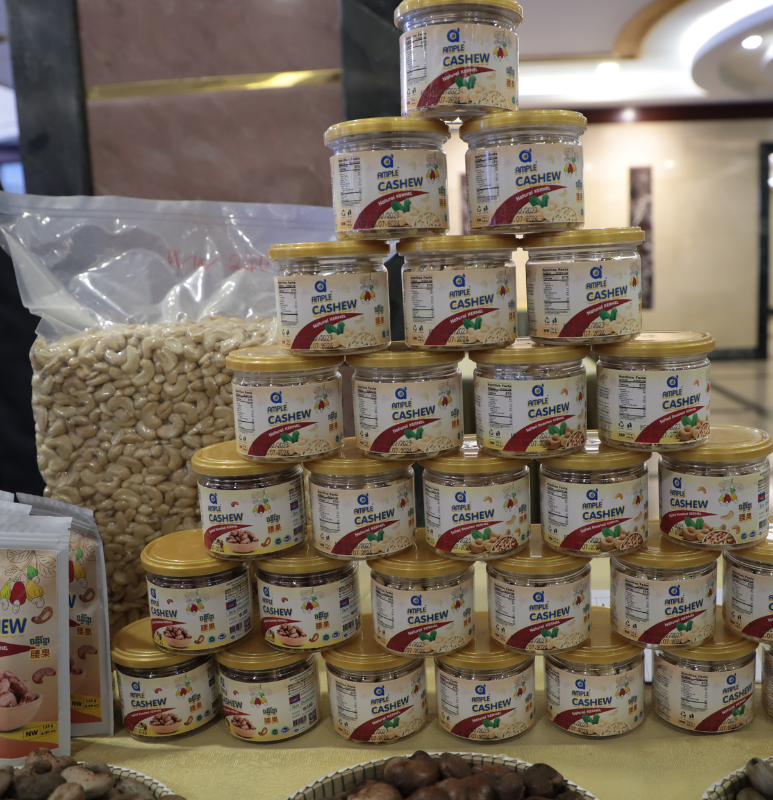
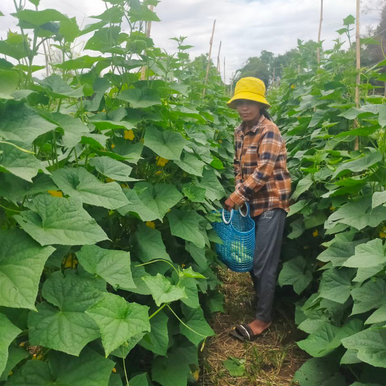
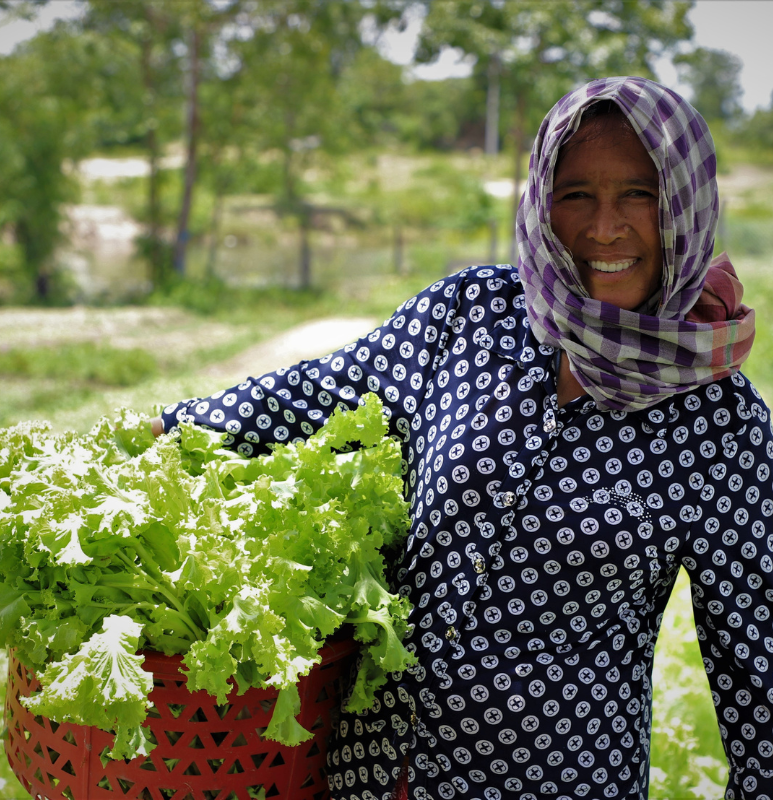
The CREA project targets the same commodities covered by the Agricultural Services Programme for an Inclusive Rural Economy and Agricultural Trade (ASPIRE – AT ), namely cashews, vegetables, fruits, maize, pepper, and native chickens, which are essential sources of income for farmers and their families, as well as contributing to the country’s food security and export potential.
Implementation Arrangements
MAFF will be the Project Executing Agency and will assign project management responsibilities to the CREA Project Support Unit (PSU). Close coordination with the ASPIRE-AT Secretariat is envisaged, thus making use of established capacity, ensuring continuity and facilitating implementation of the project.
ASPIRE Secretariat will be assisted by a core team of technical advisers funded by CREA. MAFF-General Directorate of Agriculture (MAFF-GDA) will be responsible for technical guidance in key areas including (i) formation and capacity building of ACs; (ii) registration of POs; (iii) development and approval of technical protocols for crop production; (iv) coordination of the project ICT strategy; and (v) management of Center of Excellence.
PDAFFs will (i) conduct mapping of pro-poor value chains and producer organizations; (ii) conduct formation and registration of Agriculture Cooperatives; (iii) manage and coordinate networks of Lead Farmers including identifying training needs; (iv) cooperate with regional service providers for business development services to graduated POs; (v) project planning, monitoring and reporting at Provincial level.
On the basis that the due diligence process is successful, Wing Bank and Chamroeun will be project implementing agencies and will manage the Climate Adaptation Guarantee Facility and the Matching Grant facility, screen and conduct due diligence on investment proposals, finance investments and report on results to the project.
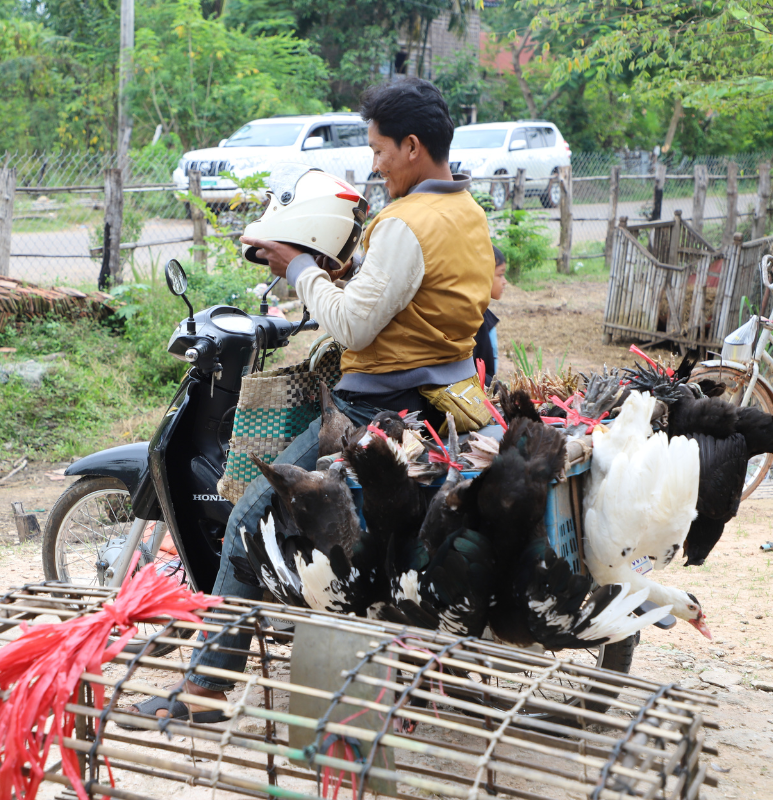
Smallholder farmers of the target beneficiaries

Additional Landless or land-poor households
Supports: Producer Organizations/Agriculture Cooperatives
CREA Component
CREA has three integrated components

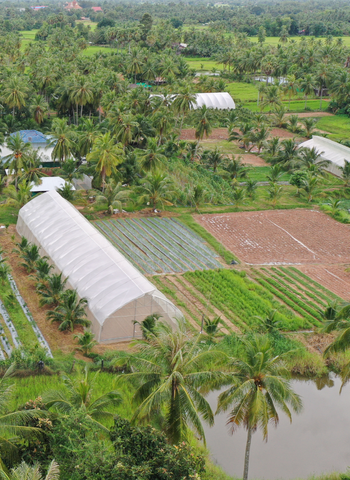

- Component 1: Promoting climate resilient technologies for building adaptive capacity in climate vulnerable agri-value chains
- Component 2: Unlocking sustainable microfinance products to support inclusive adoption of CRT
- Component 3: Strengthening institutional capacity building activities on climate resilient agriculture



CREA Faq's
Objectives
Here We Are

Video Success Story
Lesson Learned
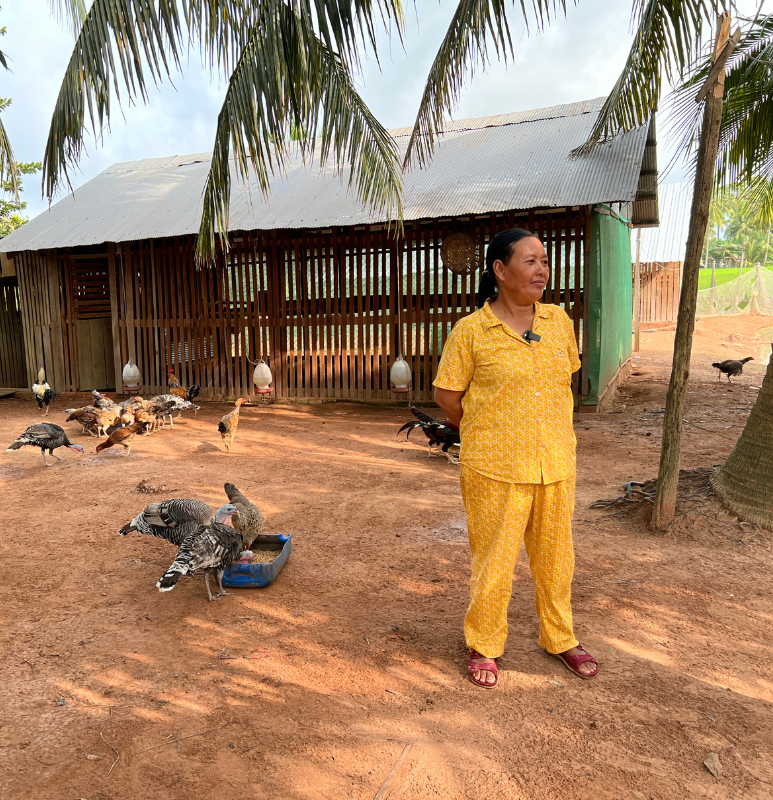
Mrs.Kong Sokny is a member of the chicken breeding business collaboration collaboration in Trapeang Tour Village, Trapeang Tour Commune, Chhouk Commune, Kampot Province, in context in context. With the support of new agricultural techniques, the new climate change (Aspir), which is a “Rush-it” project, which is an emergency upgrade of farmer’s household production using small production Information Technology to meet COVD 19 in Cambodia and is an ASPrie project aimed at supporting the negative farmers who are affected by the 19-in-Corvadine Corners, chicken and vegetable chains.
Watch here..
Succussed Story Lead farmer for our Sustainability and increase the production of chicken production of Business Cluster on Covid-19 at Kampot province.
Watch More.. Consultative partners
Our Core Committee