
 by ASPIRE-AT Programme
From Credit to Confidence: How ASPIRE-AT Is Helping a Pepper Farmer Build a More Resilient Future
When Farming Potential Meets Financial Pressure
These challenges have become even sharper in Cambodia’s current economic context. Higher fuel, transport, fertilizer and input costs are affecting the cost of production across rural value chains. For pepper farmers, this means that household resilience depends not only on how much they produce, but on whether they can access affordable finance, apply the right techniques, meet quality standards and sell through more stable market channels.
This is the space in which the Agriculture Services Programme for an Inclusive Rural Economy and Agricultural Trade (ASPIRE-AT), implemented by the Ministry of Agriculture, Forestry and Fisheries with support from the International Fund for Agricultural Development (IFAD), the Royal Government of Cambodia and partners, is making a practical difference. Through cooperative strengthening, technical training, market facilitation and access to agricultural credit, ASPIRE-AT is helping rural smallholders move from vulnerability to greater confidence.
A Family Rooted in the Pepper Value Chain
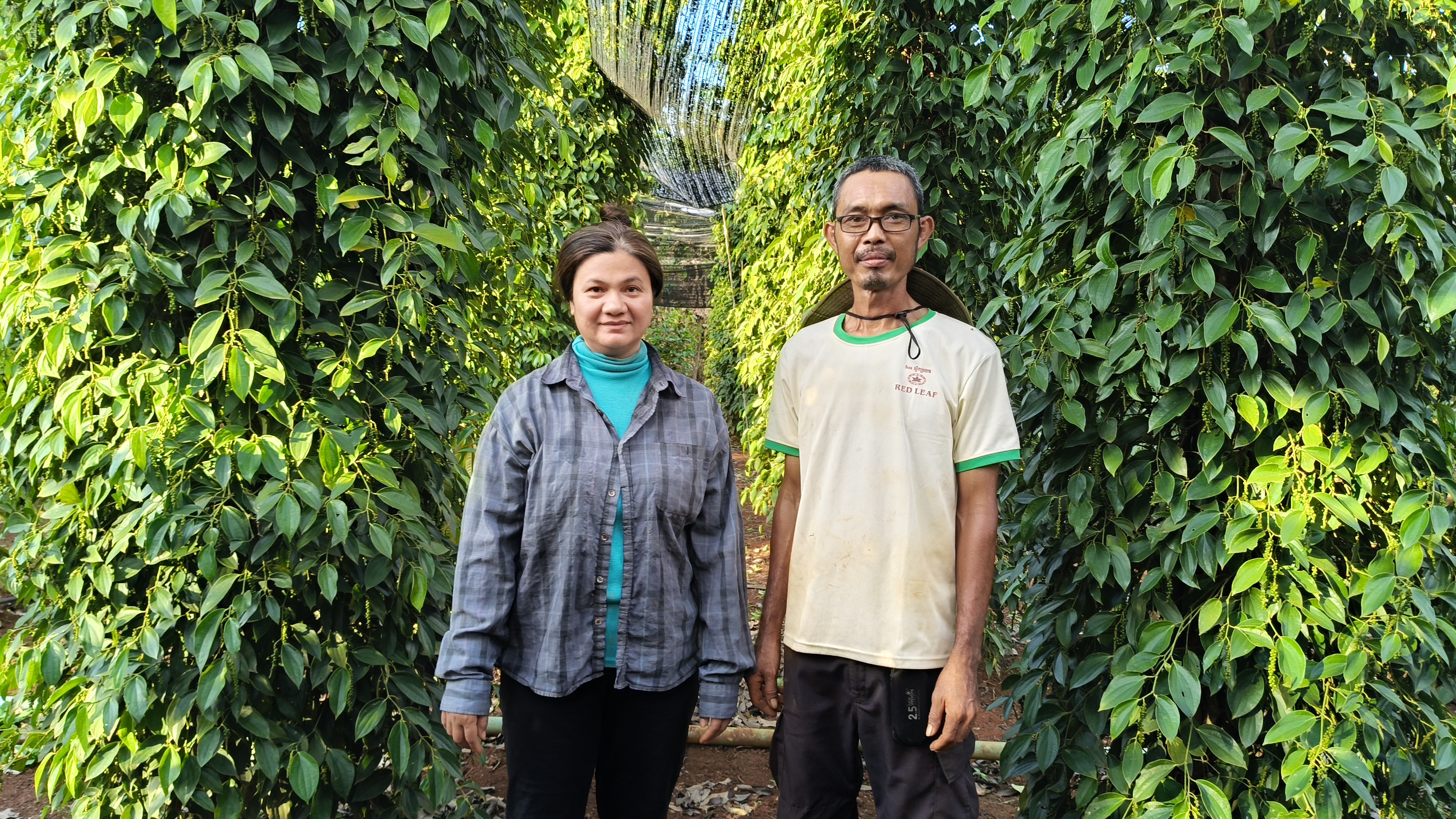
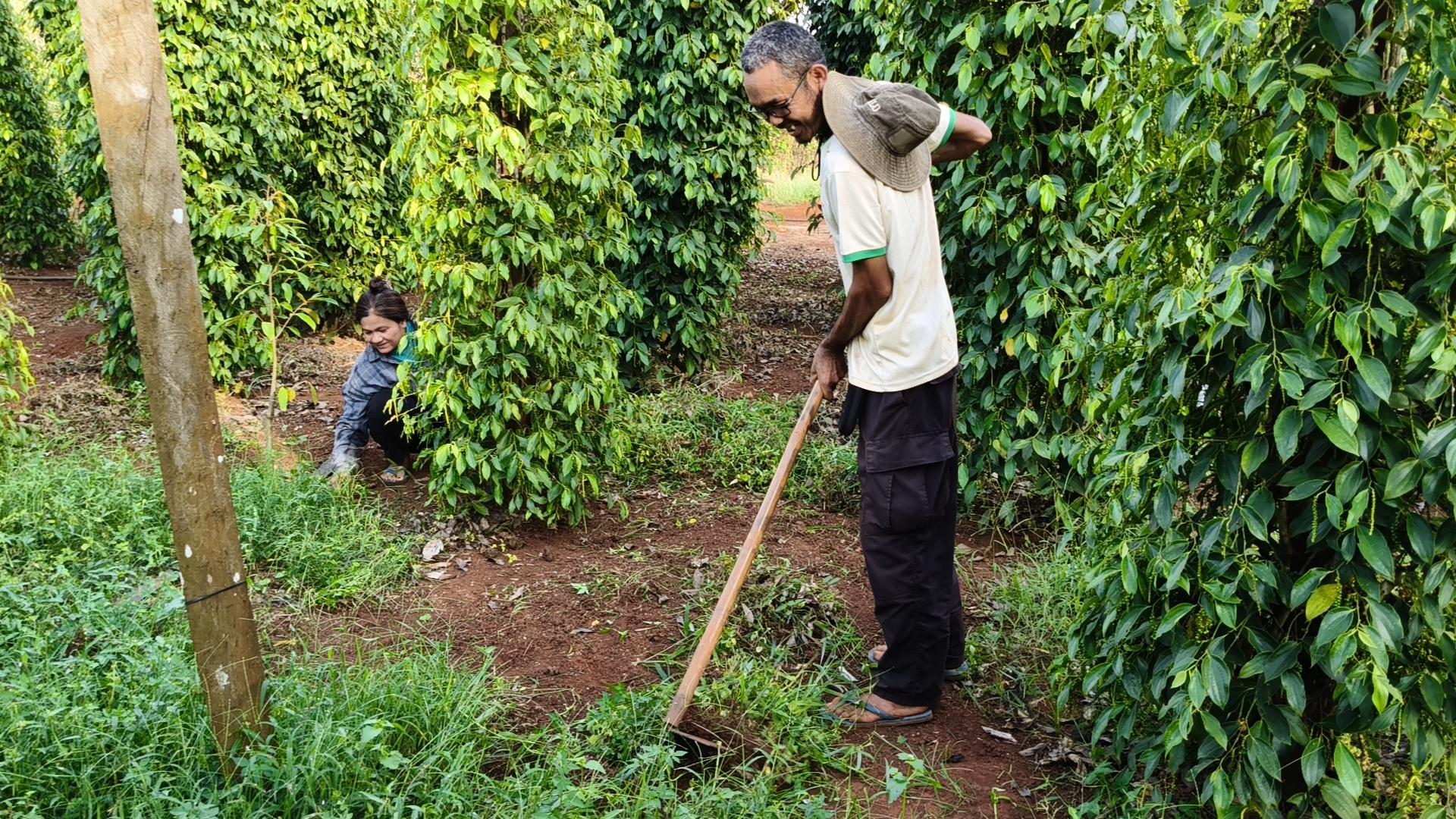
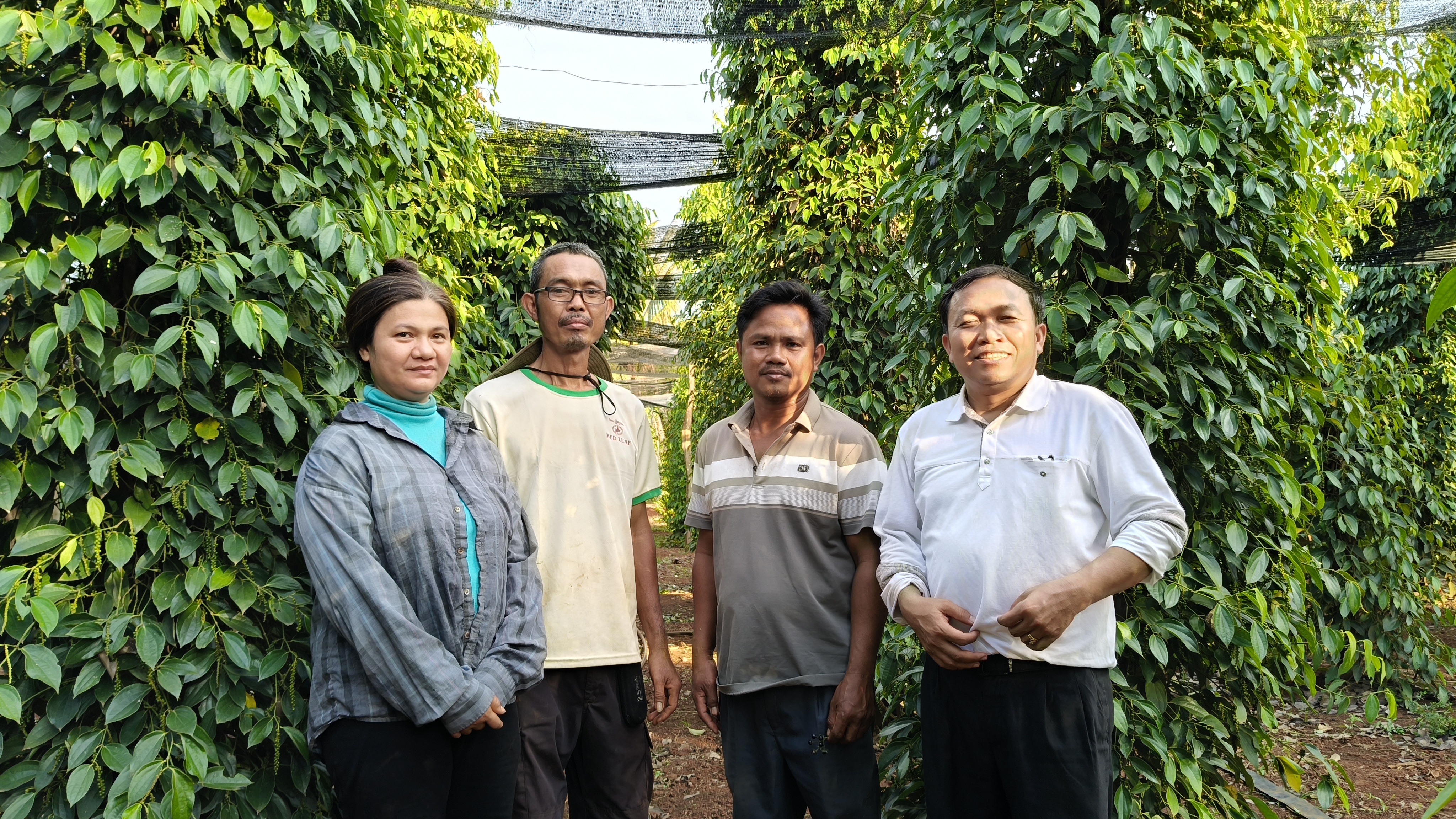
Mr. Chou Chan Savyuth, aged 45, and his wife, Mrs. Sbaong Sibophal, also aged 45, live in Memot Kandal village, Memot commune, Memot district, Tbong Khmum Province. Together, they support three sons and have built their livelihood around pepper farming.
Recognising the potential of pepper, Mr. Savyuth joined the Tromoong Memot Organic Pepper Agricultural Cooperative. His decision was not only about membership; it was about joining a wider value-chain effort to improve product quality, strengthen collective action and secure more reliable market opportunities.
For many rural smallholders, an agricultural cooperative is more than an institution. It is a bridge between individual farms and organised markets. It helps farmers share information, improve quality, engage buyers and reduce the isolation that often weakens their bargaining power.
The Cost of Uncertainty
Before receiving support through ASPIRE-AT, Mr. Savyuth’s family faced serious economic constraints. Household income was not keeping pace with daily expenses, including food, children’s education, health care and the agricultural inputs needed to maintain the pepper plantation.
The family also faced market instability. Pepper sales depended heavily on local middlemen and traders from Viet Nam, leaving the household exposed to fluctuating prices and weak bargaining power. When working capital was needed, the family borrowed from private banks at interest rates of up to 18 per cent per year. This created a heavy financial burden and reduced the space to invest in the farm.
This is the type of systemic friction that affects many rural smallholders. A farmer may have land, experience and motivation, but still be constrained by expensive credit, unstable buyers, rising input costs and limited capacity to invest in improvements that would increase productivity or reduce risk.
ASPIRE-AT and ARDB: Turning Access to Finance into Productive Investment
A turning point came when the Tromoong Memot Organic Pepper Agricultural Cooperative was selected as a target cooperative under ASPIRE-AT. As a cooperative member, Mr. Savyuth participated in training on organic pepper cultivation and maintenance, small-scale business planning, agricultural credit procedures and business matchmaking with purchasing companies.
This combination is important. Credit alone is not enough. For rural finance to produce development results, it must be linked to technical knowledge, business planning, market access and responsible borrowing. ASPIRE-AT’s model is designed around this logic: strengthen the farmer and the cooperative before and alongside the loan.
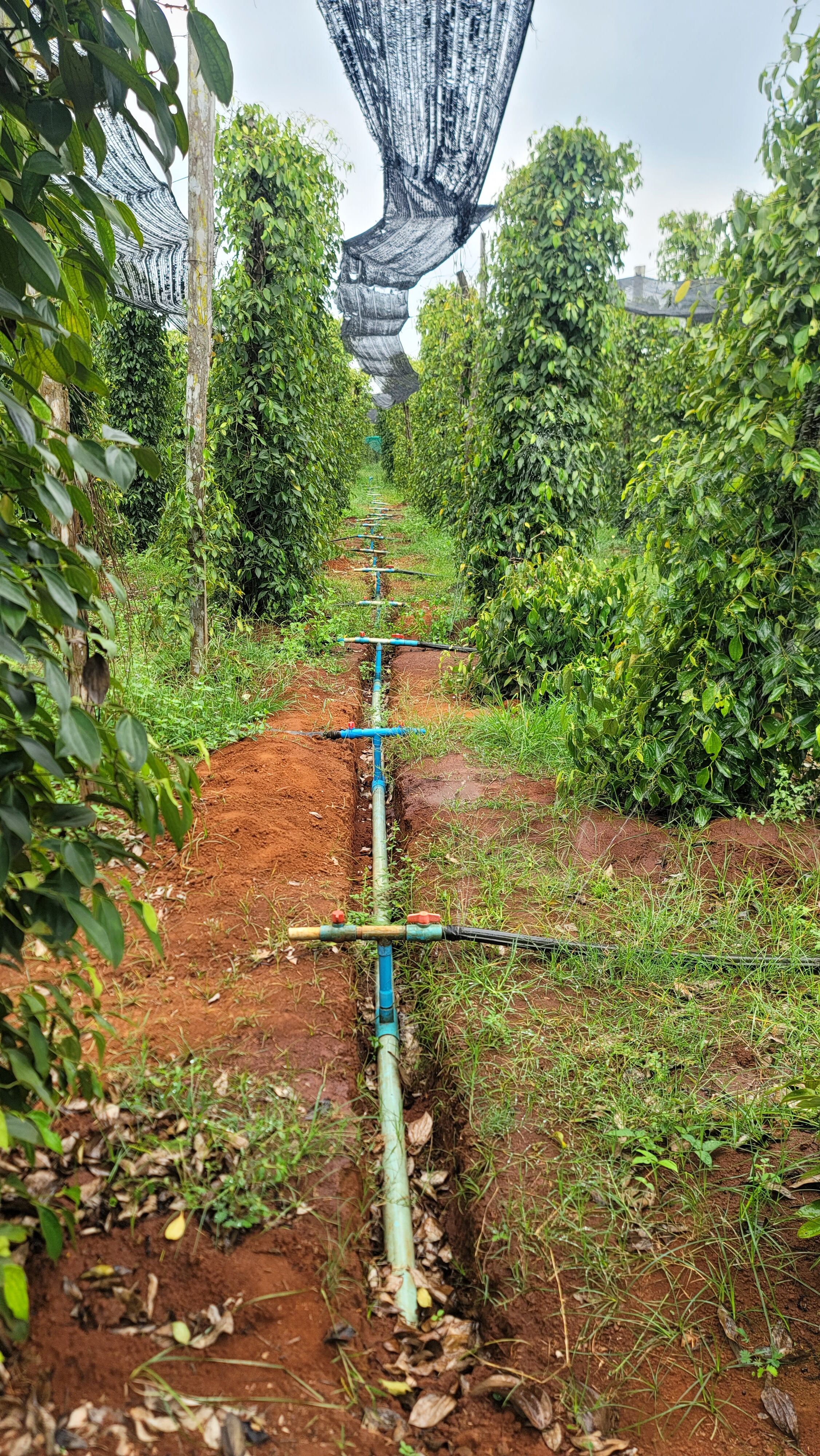
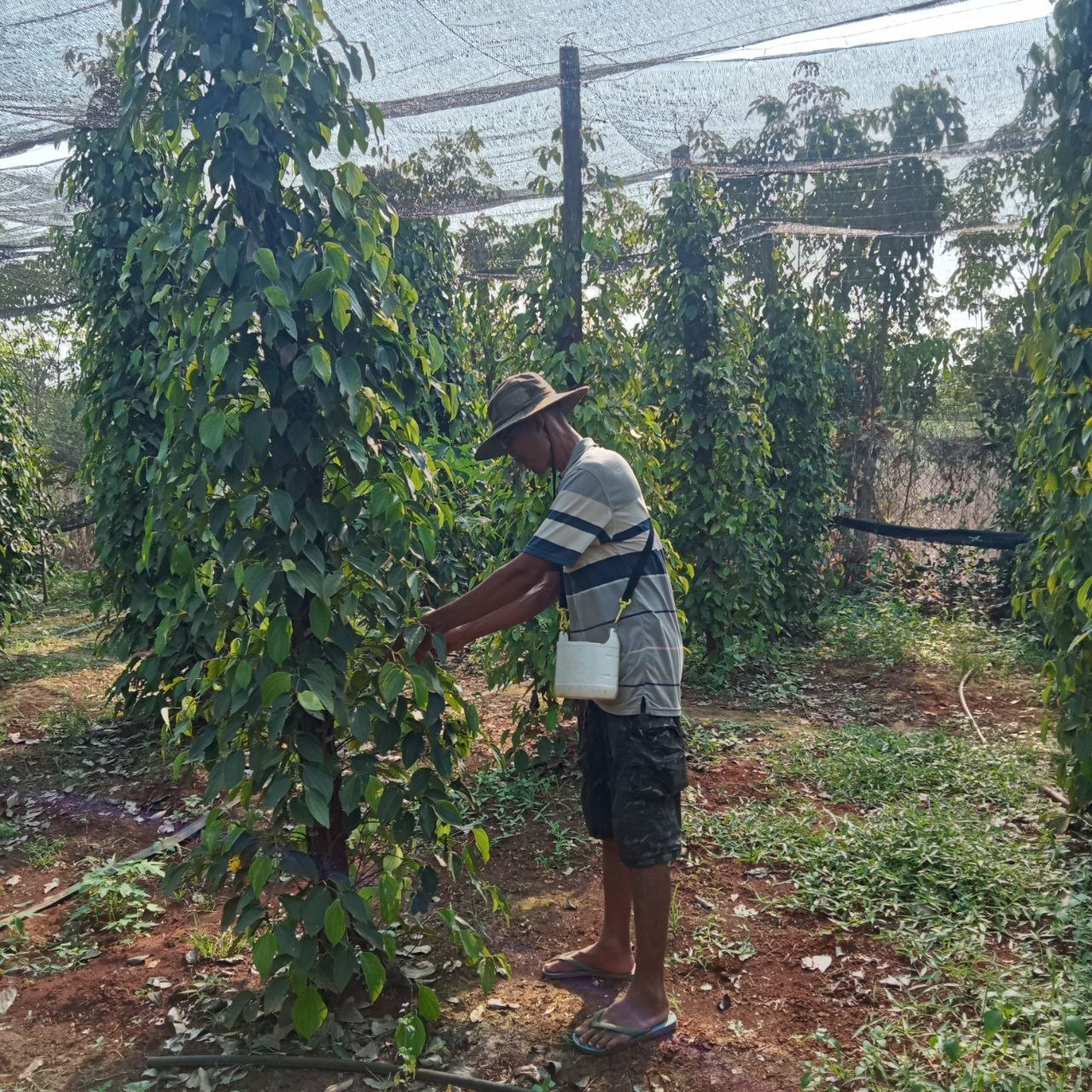
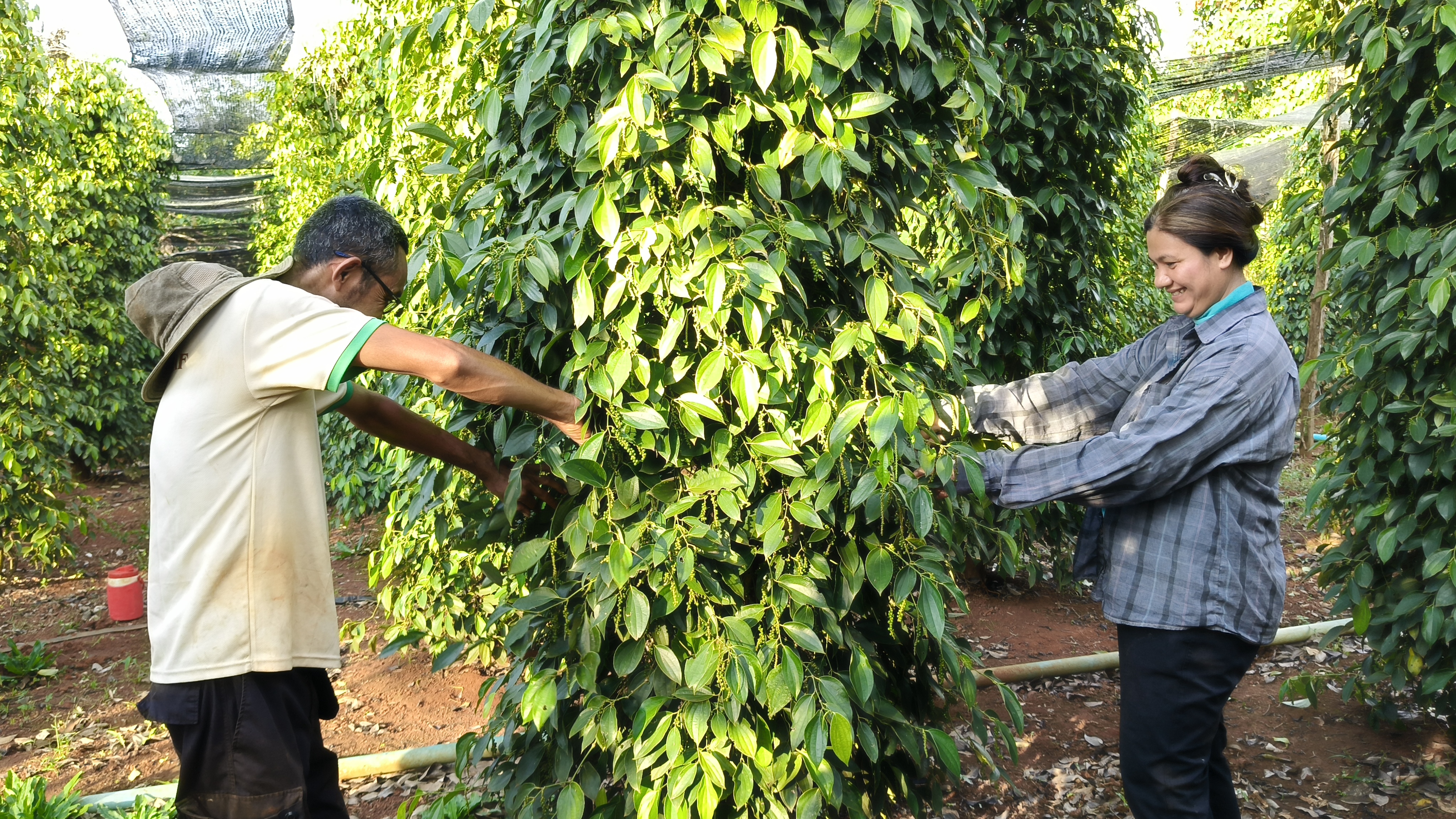
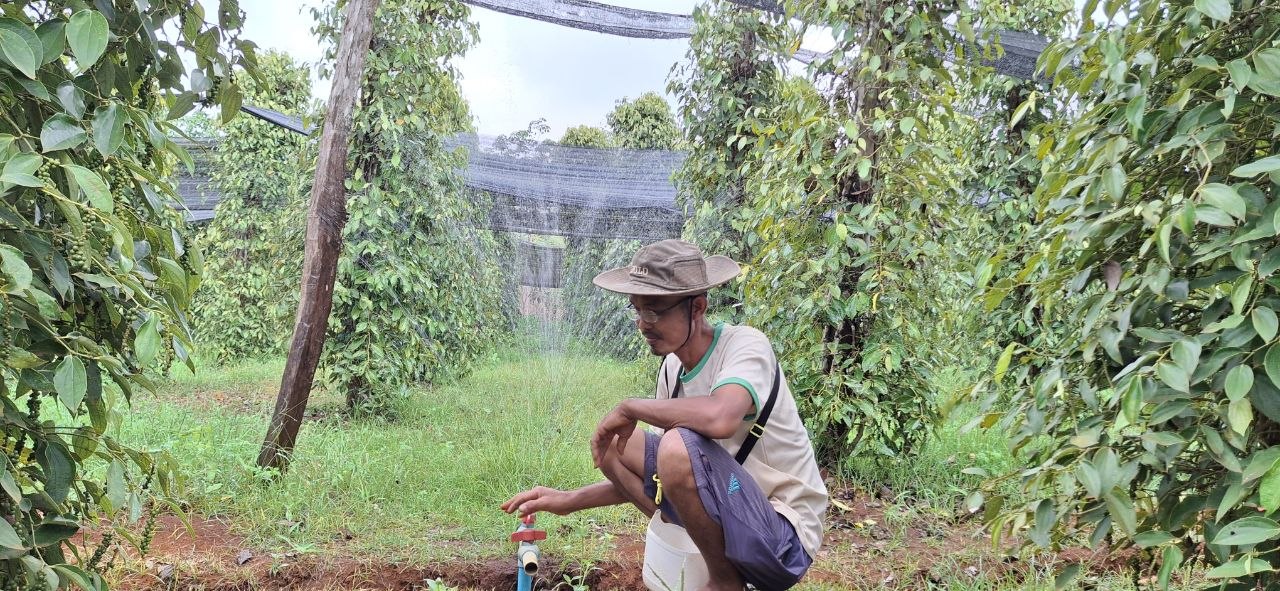
After completing the required training and appraisal process, Mr. Savyuth applied for and received a loan of US$1,600 through the Rural Development and Agricultural Bank (ARDB). He used the loan for targeted farm improvements, including shade netting for pepper posts to reduce heat stress, a modern irrigation system and further expansion of pepper production.
The investment directly addressed production constraints. Shade netting helps protect pepper plants from excessive heat. Improved irrigation strengthens water management and reduces vulnerability during dry periods. Expanded production increases the household’s potential to generate income, provided quality and market access are maintained.
From High-Cost Borrowing to More Purposeful Financing
For Mr. Savyuth, the loan was not simply a financial transaction. It represented a shift from reactive borrowing to planned investment. Instead of borrowing at high cost to cope with immediate pressure, the family was able to access more favourable finance tied to a clear productive purpose.
He explained that bank trust depends on more than documents. Legal papers such as identity cards, family books and land titles are important, but so are good credit history, honesty and a real livelihood that matches the purpose of the loan.
This message is particularly important in rural finance. Access to credit must be built on trust, discipline and repayment capacity. When farmers understand the conditions of borrowing and use loans for productive investment, credit can become a tool for resilience rather than a source of deeper vulnerability.
Stable Buyers, Stronger Confidence
Today, through a contract farming arrangement facilitated through the cooperative, the organic pepper produced by Mr. Savyuth’s family is purchased at a clearer and more stable price. This reduces dependence on uncertain spot-market sales and gives the household a stronger basis for planning production, managing costs and repaying credit.
The family has also diversified beyond pepper. Mr. Savyuth has allocated 20 ares of land to mixed fruit trees, including mangosteen and rambutan. This provides food for household consumption and creates an additional source of daily income.
This diversification is not a small detail. In a context of rising input and living costs, rural resilience often depends on multiple income streams. Pepper remains the commercial anchor, but fruit trees help improve household food security and reduce reliance on a single crop.
A Practical Pathway from Project Support to Household Resilience
Mr. Savyuth’s story shows how ASPIRE-AT’s interventions can translate into household-level change when inputs are sequenced properly. The project supports cooperative inclusion, technical training, credit readiness, access to finance and buyer linkages. These inputs create practical outputs: improved knowledge, productive investment, better water management, more stable market access and stronger business discipline.
The outcome is not only higher confidence for one family. It is a more resilient farming model: a household able to reduce dependence on high-interest borrowing, invest in climate-sensitive production practices, engage through a cooperative and sell through clearer market arrangements.
This is the development logic that matters for Cambodia’s rural transformation. Rural smallholders do not need isolated services. They need integrated support that connects finance, technology, organisation and markets.
A Message Shared with Other Farmers
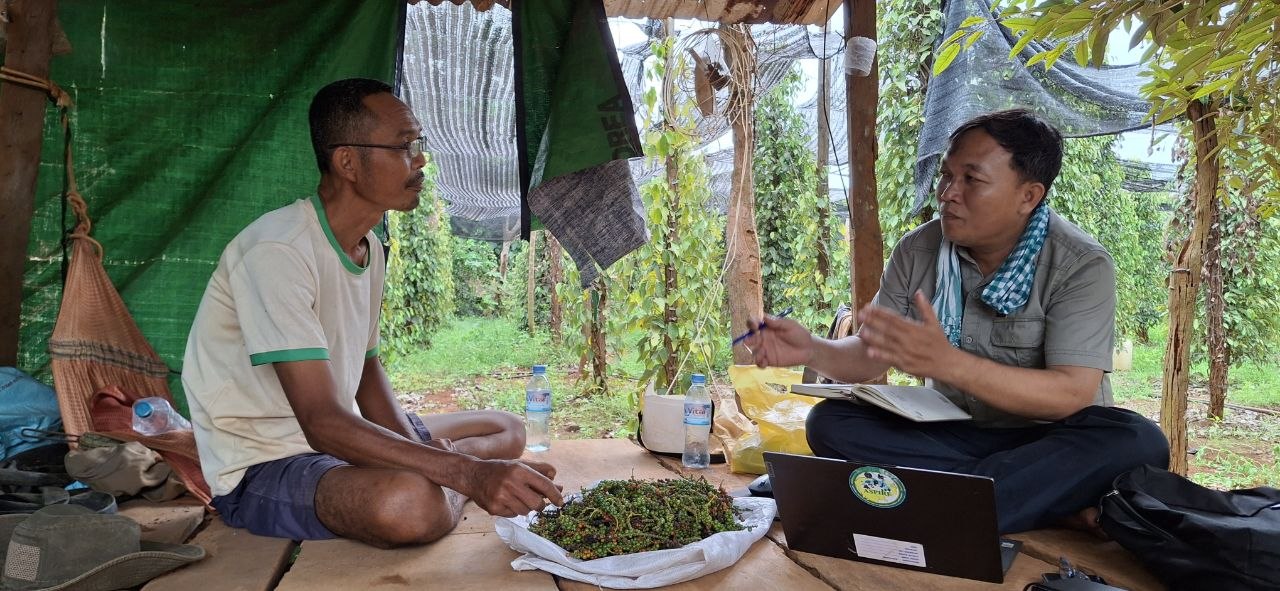
As a model farmer, Mr. Savyuth encourages other farmers to be courageous, honest and disciplined in managing their farm businesses. He also stresses the importance of keeping regular records of income and expenses, so that families can understand their real costs and make better decisions.
His advice points to a deeper lesson. Modernising agriculture is not only about equipment, irrigation or credit. It is also about management. Farmers who record costs, assess profits, work with cooperatives and meet buyer standards are better positioned to withstand shocks and capture opportunities.
Building Resilience Through Rural Finance and Cooperative Action
For donors and development partners, the story from Memot is a clear example of how rural finance can work when it is embedded in a broader system of support. A US$1,600 loan becomes meaningful because it is linked to technical training, cooperative organisation, buyer relationships and a household that is ready to invest.
In Cambodia’s current context of higher energy, transport and agricultural input costs, this type of intervention is increasingly important. It helps rural smallholders avoid being trapped between expensive credit and unstable markets. It also supports the wider objective of building producer organisations that are more market-oriented, financially ready and able to participate in higher-value agricultural value chains.
Mr. Savyuth’s journey is not only a story of credit. It is a story of confidence: confidence to invest, confidence to plan, confidence to sell through more stable channels and confidence to build a better future for his family.
In Tbong Khmum, resilience is taking root through pepper vines, cooperative action and the careful use of finance that reaches rural smallholders when they need it most.
Please download the story: From Credit to Confidence: How ASPIRE-AT Is Helping a Pepper Farmer Build a More Resilient Future