
 by ASPIRE-AT Programme
Farmer to Farmer
How Peer Learning Is Strengthening Cambodia’s Cashew Resilience: A Crop at the Heart of Rural Livelihoods
In Stung Treng Province, cashew is more than a crop. It is a source of rural employment, household income and growing agro-industrial potential. With approximately 67,000 hectares planted and an estimated 10 million productive trees, the province’s cashew sector generates significant annual value for farmers, workers, traders and local communities. Yet this potential is being tested by a harsher economic environment. Rising fuel, transport, fertilizer and pesticide costs are increasing the cost of production, tightening margins and exposing rural smallholders to shocks that begin far from the farm but are felt directly in the field.
For Cambodia’s cashew growers, resilience is therefore not an abstract development concept. It is the ability to manage input costs carefully, protect trees from pest and disease, maintain soil health, organize collectively, negotiate better prices and keep production viable when market and energy conditions become uncertain. This is where the Agriculture Services Programme for an Inclusive Rural Economy and Agricultural Trade (ASPIRE-AT), implemented by the Ministry of Agriculture, Forestry and Fisheries with support from the International Fund for Agricultural Development (IFAD) and the Royal Government of Cambodia, is making a practical difference.
Building a Farm, One Season at a Time
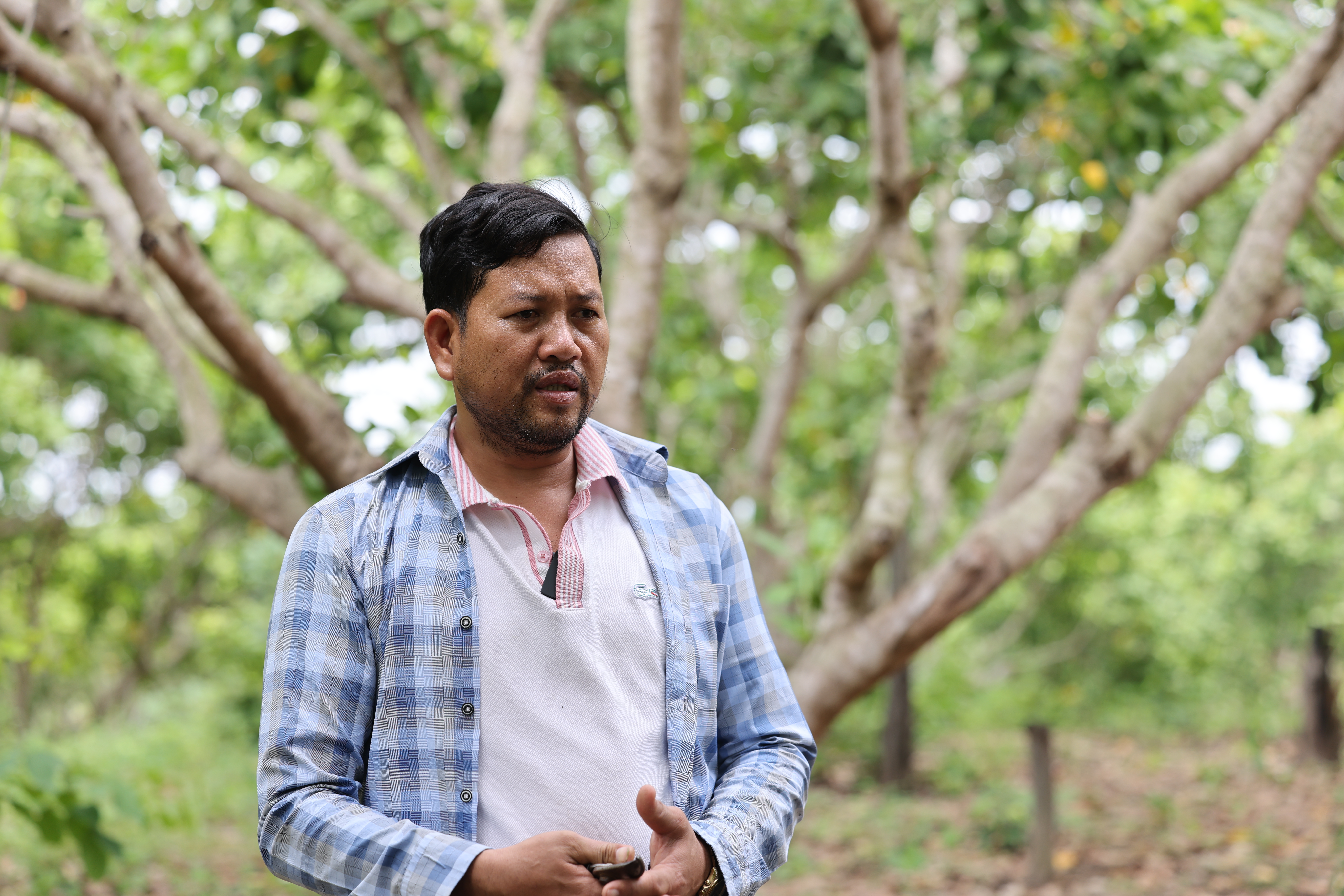
At the centre of this story is Mr. Sean Piseth, a 44-year-old farmer from Ou Ruessei Kandal village, Ou Ruessei Kandal Commune, Siem Bouk District, Stung Treng Province. Originally from Kampong Cham, he moved to Stung Treng more than a decade ago and gradually built his livelihood from a small patch of land. Today, he manages 4.5 hectares of cashew plantation, with around 700 trees, of which 2.5 hectares are already productive.
His results show what disciplined farm management can achieve. During the 2025 harvest season, from February to April, Mr. Piseth harvested and sold around 6.73 tons of fresh cashew nuts, equivalent to approximately 2.69 tons per hectare. This generated gross income of about 35 million Cambodian riels and an estimated net profit of 30 million riels, or around US$7,500, after deducting labour, fertilizer, pesticide and other production costs.
These figures matter because they connect directly to the challenge rural smallholders face today. In a context of higher input prices, profitability depends not only on how much farmers produce, but on how well they manage each stage of production. For cashew, this includes pruning, land improvement, drainage, pest monitoring, correct fertilizer use, proper timing of chemical application, harvesting protocols and cost analysis. When fuel and fertilizer costs rise, the difference between applying inputs blindly and applying them based on need, timing and active ingredients becomes the difference between resilience and vulnerability.
From Cooperative Support to Farmer Leadership
Mr. Piseth joined the Svay Chanti Ou Ruessei Kandal Agricultural Cooperative in August 2024. The cooperative itself was not created in isolation; it evolved from a business cluster supported under the previous ASPIRE programme in 2018 and 2019. Through ASPIRE-AT support, Mr. Piseth gained access to advisory services, technical exchange with other cashew growers and cooperative-based business practices. These included collective selling to improve price negotiation and collective purchasing of inputs to reduce costs.
This is the practical pathway from project input to development outcome. ASPIRE-AT invests in farmer organization, advisory support and lead farmer development. These inputs produce immediate outputs: better technical knowledge, stronger cooperative practices and wider peer learning. In turn, these outputs help rural smallholders improve productivity, reduce avoidable losses, strengthen market readiness and build resilience to price and climate-related shocks.
Learning That Happens in the Field
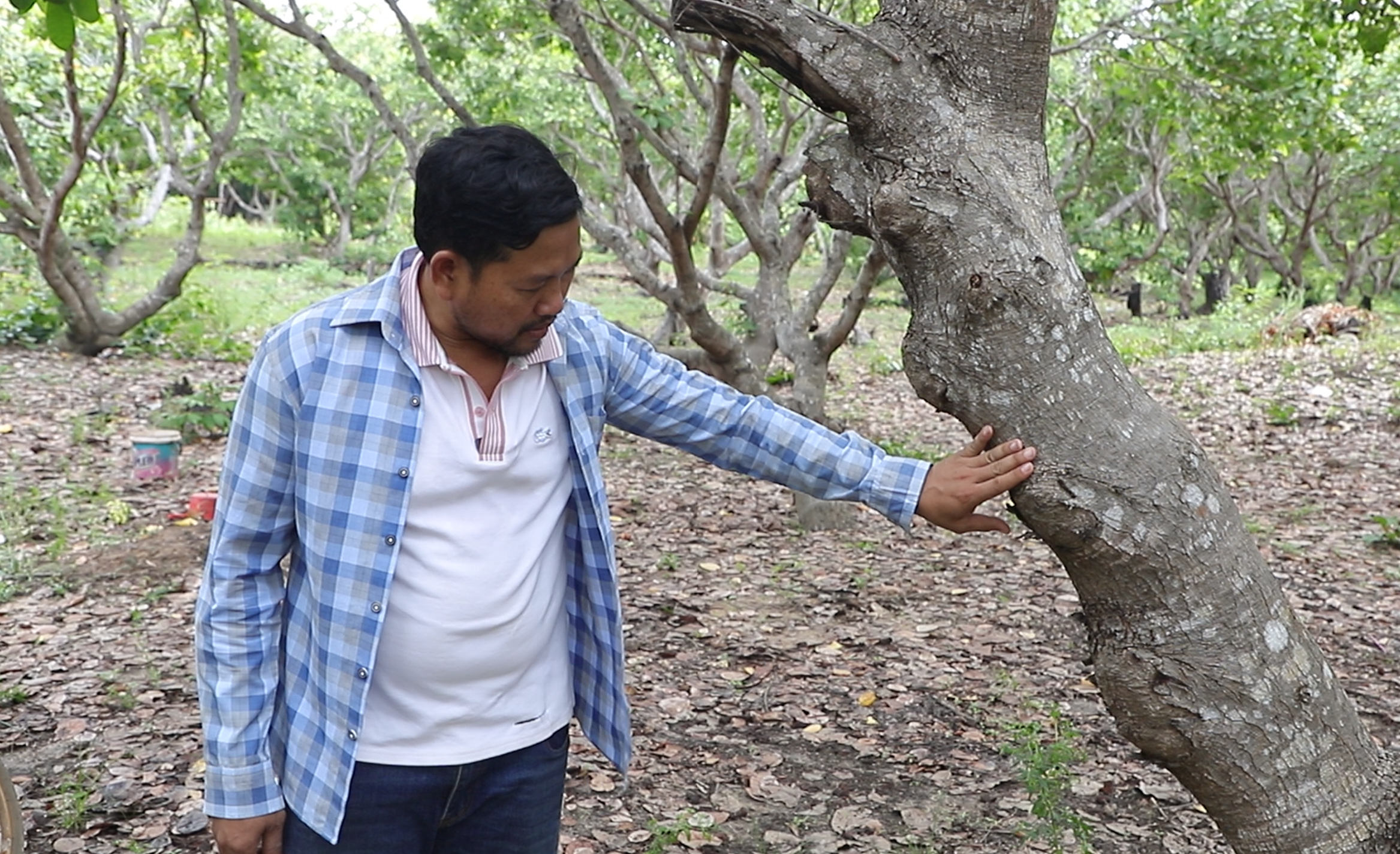
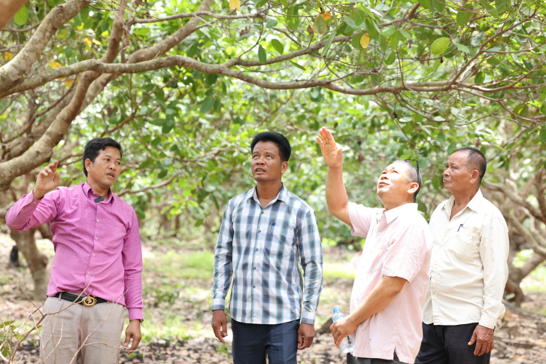
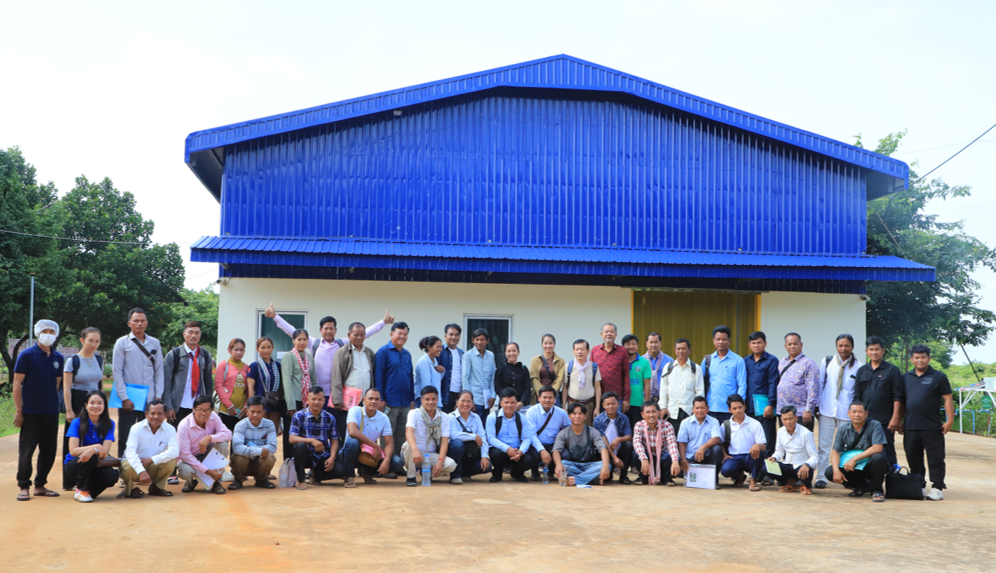
On 19 and 20 June 2025, Mr. Piseth served as a lead farmer in a farmer-to-farmer learning activity organized through ASPIRE-AT. The activity brought together 47 participants, including seven women, from ASPIRE-AT, lead farmers and representatives from Kampong Thom, Kampong Cham, Tboung Khmum, Kratie, Ratanakiri, Preah Vihear, Oddar Meanchey and Stung Treng.
The training was not a classroom lecture detached from farming reality. It was a field-based learning exchange built around the full cashew production cycle. Mr. Piseth shared practical experience on land improvement, shoot management, flowering and young fruit care, weeding, harvesting protocols, production costs, operational costs and profit margins. Participants also received hands-on demonstrations on cashew tree pruning and NPK fertilizer application.
The value of this approach lies in its credibility. Farmers often learn best from other farmers who face similar constraints and can demonstrate results under local conditions. A lead farmer who can explain both the technical practice and the economic logic behind it becomes more than a trainer; he becomes evidence that improved farm management can work.
Practical Knowledge for Resilient Farms
The messages shared by Mr. Piseth were simple but powerful: monitor the farm regularly for pests and water-flow issues; prune trees from early growth through maturity; improve soil through organic and chemical fertilizers; manage weeds and drainage; prevent insect and fungal damage on time; and buy fertilizers and pesticides based on active ingredients rather than brand labels. He also emphasized careful timing: applying micro-nutrients and herbicides in the morning, and insecticides and fungicides later in the day, when conditions are more appropriate.
These are highly practical lessons in resilience. Better pruning reduces pest and disease pressure. Better drainage helps protect farms from water stress. Better input decisions reduce waste and lower production costs. Better economic analysis helps farmers understand whether their production choices are profitable. Better cooperative organization allows rural smallholders to engage markets with greater confidence and bargaining power.
A Model for Rural Transformation
This farmer-to-farmer model also reflects ASPIRE-AT’s broader transition from organizing producer groups to deepening the quality of services they receive. The programme’s development logic is not simply to register producer organizations, but to help them become stronger, more market-oriented and more financially ready. In Cambodia’s current context, this is essential. Rural smallholders need more than production advice; they need institutions that can help them aggregate supply, access finance, manage risk, connect with buyers and respond to changing market requirements.
For donors and development partners, the lesson from Stung Treng is clear. Relatively modest investments in peer learning, cooperative strengthening and practical extension can generate benefits that are both economic and social. They help rural smallholders protect income, strengthen confidence, share knowledge across provinces and reduce isolation in the face of shocks. They also demonstrate how climate-smart and market-oriented agriculture can be grounded in ordinary decisions made on family farms: when to prune, how to fertilize, how to control pests, how to calculate costs and how to sell collectively.
Mr. Piseth’s story is not only about one farmer’s success. It is about the type of rural transformation Cambodia needs at this moment: farmer-led, cooperative-based, technically grounded and resilient to rising costs. As energy and input shocks continue to affect rural livelihoods, ASPIRE-AT’s farmer-to-farmer approach offers a practical route to strengthen productivity, reduce vulnerability and help rural smallholders participate more effectively in Cambodia’s growing agricultural value chains.
In Stung Treng, resilience is being built tree by tree, farm by farm and farmer by farmer.
Please download the story: How Peer Learning Is Strengthening Cambodia’s Cashew Resilience: A Crop at the Heart of Rural Livelihoods