
 by ASPIRE-AT Programme
Bright Leadership, Stronger Markets
In Kratie Province, bright leadership is helping farmers prepare not only for the next harvest, but for the future of Cambodia’s agricultural trade.
In Techo Sampatean Chambak village, Chambak Commune, Praek Prasab district, Kratie Province, Mr. Pen Ban is showing what rural leadership can look like when technical knowledge, cooperative action and market ambition come together.
At 42 years old, Mr. Pen Ban serves as Chairman of the Board of Directors of the Chambak Concession Agricultural Cooperative, which brings together 204 member households. He was selected as a lead farmer under the farmer-to-farmer learning approach through the Agriculture Services Programme for an Inclusive Rural Economy and Agricultural Trade (ASPIRE-AT), implemented by the Ministry of Agriculture, Forestry and Fisheries and co-financed by the International Fund for Agricultural Development (IFAD), the European Union, the European Investment Bank, the Royal Government of Cambodia, partner financial institutions, participating SMEs and farmers, and a South-South and Triangular Cooperation grant.
His role is both practical and strategic. He shares field-tested experience on crop maintenance with cooperative members, while also helping the cooperative prepare for higher production standards, stronger market linkages and a more competitive future.
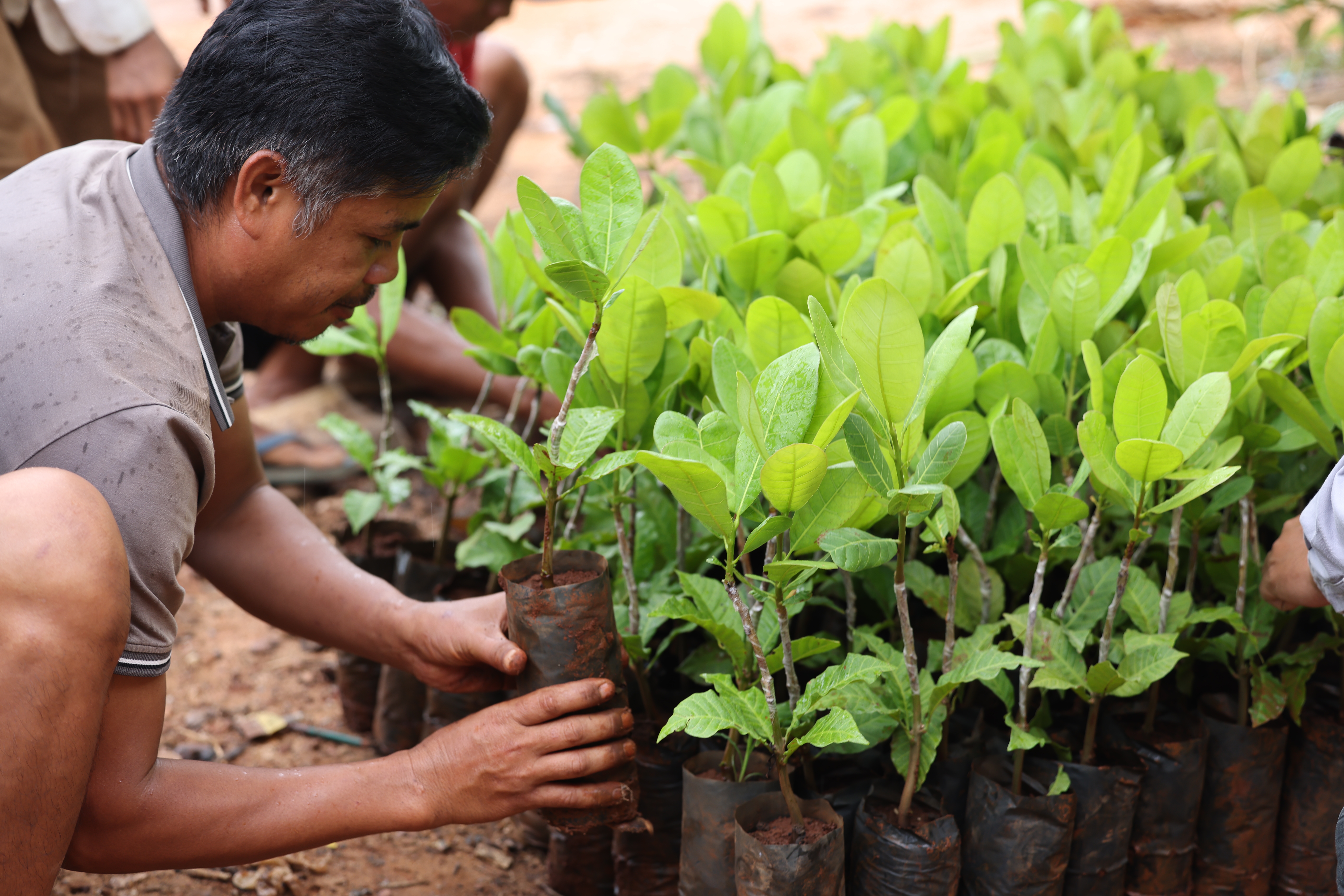
Farming in a Time of Rising Costs
Cambodia’s rural smallholders are farming in a more difficult economic environment. Higher fuel, fertilizer, transport and logistics costs are increasing production risks and reducing the margin for error. For farmers, this means that resilience depends not only on planting more or harvesting more, but on improving how farms are managed, how inputs are used, how quality is controlled and how farmers negotiate with buyers.
Mr. Pen Ban’s leadership responds directly to these pressures. His approach focuses on improving product quality, reducing unnecessary chemical input use, strengthening natural fertilizer and pesticide practices, and preparing farmers to meet buyer requirements. In a context where imported agricultural inputs can become more expensive and less predictable,
the ability to produce and use natural fertilizers is not only an environmental practice; it is also a cost-management and resilience strategy.
From Good Farming to Better Standards
Mr. Pen Ban has a clear long-term vision: to help cooperative members produce high-quality agricultural products that can meet market requirements, including those linked to international standards. He promotes production practices that improve yield and quality while reducing dependence on chemical inputs.
Over seven years, he has developed strong practical knowledge in crop cultivation, including the use of natural fertilizers and natural pesticides. He has also created and marketed natural fertilizers for use within his agricultural cooperative and has supplied them to other provinces, including Kampong Speu and Preah Vihear.
This is a strong example of farmer-led innovation. The knowledge does not remain with one person. It is shared, tested and adapted through the cooperative, creating a local system of learning that helps rural smallholders improve production practices from within their own communities.
Negotiating Better, Selling Smarter
Mr. Pen Ban’s leadership extends beyond production. He has become a skilled negotiator in both input purchasing and product marketing. This matters because rural smallholders are often squeezed on both sides: they pay more for inputs when they buy individually, and they receive weaker prices when they sell without organisation or bargaining power.
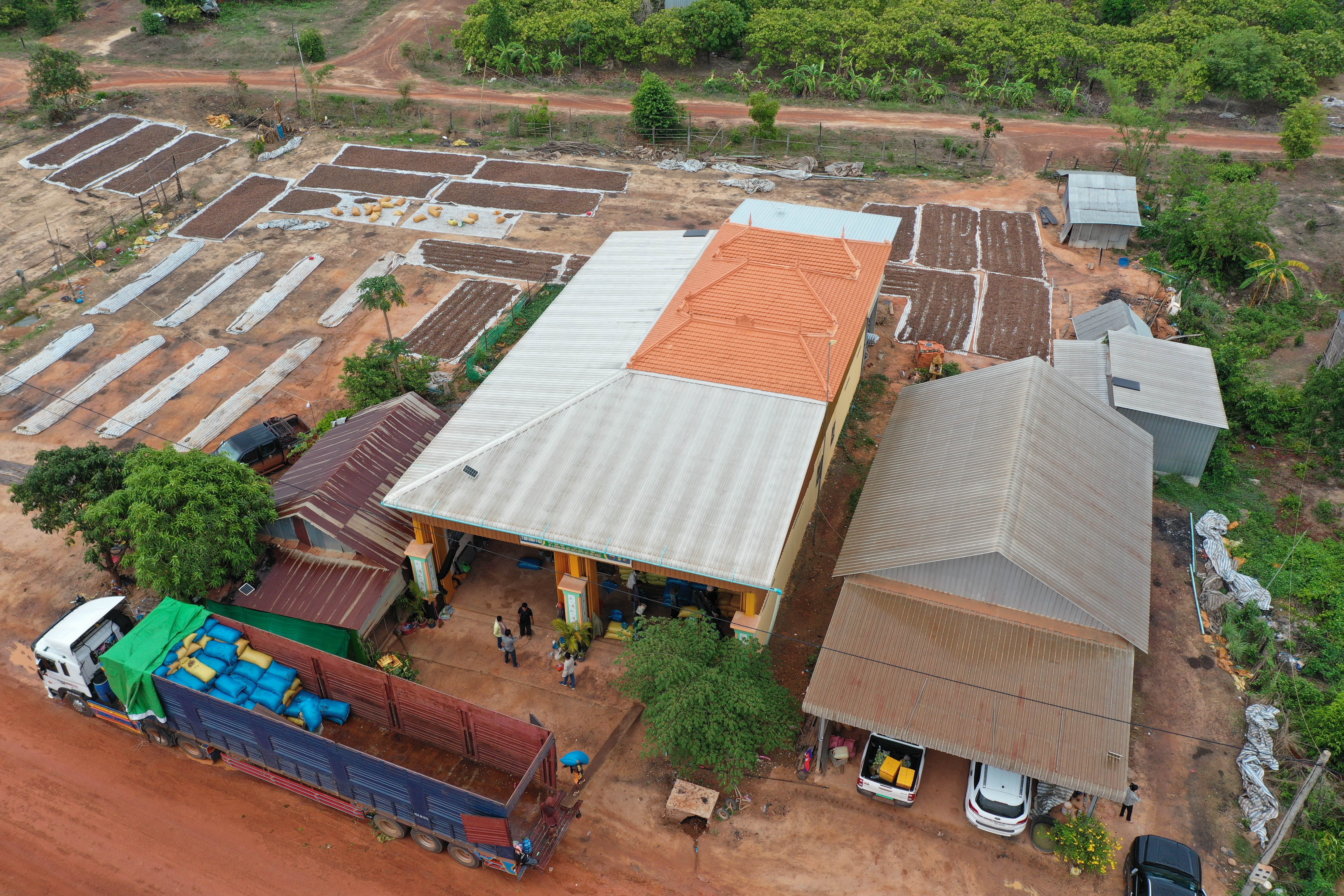
Through cooperative action, Mr. Pen Ban has helped strengthen the cooperative’s market position. He has negotiated the sale of 94 tons of dried produce to MIRATH Agri Tech Co. Ltd, 100 tons of dried produce to Nileda Co. Ltd. and around 1,000 tons of wet produce to Khmer Agro-Cashew (KOC) Co. Ltd. In line with these contracts, he also helped establish a management team to support harvesting and storage.
This is the practical pathway from capacity building to market access. ASPIRE-AT supports lead farmers and producer organisations. Lead farmers strengthen member knowledge and production discipline. Cooperatives improve aggregation, quality control and buyer engagement. These outputs then help rural smallholders participate in more stable and remunerative value chains.
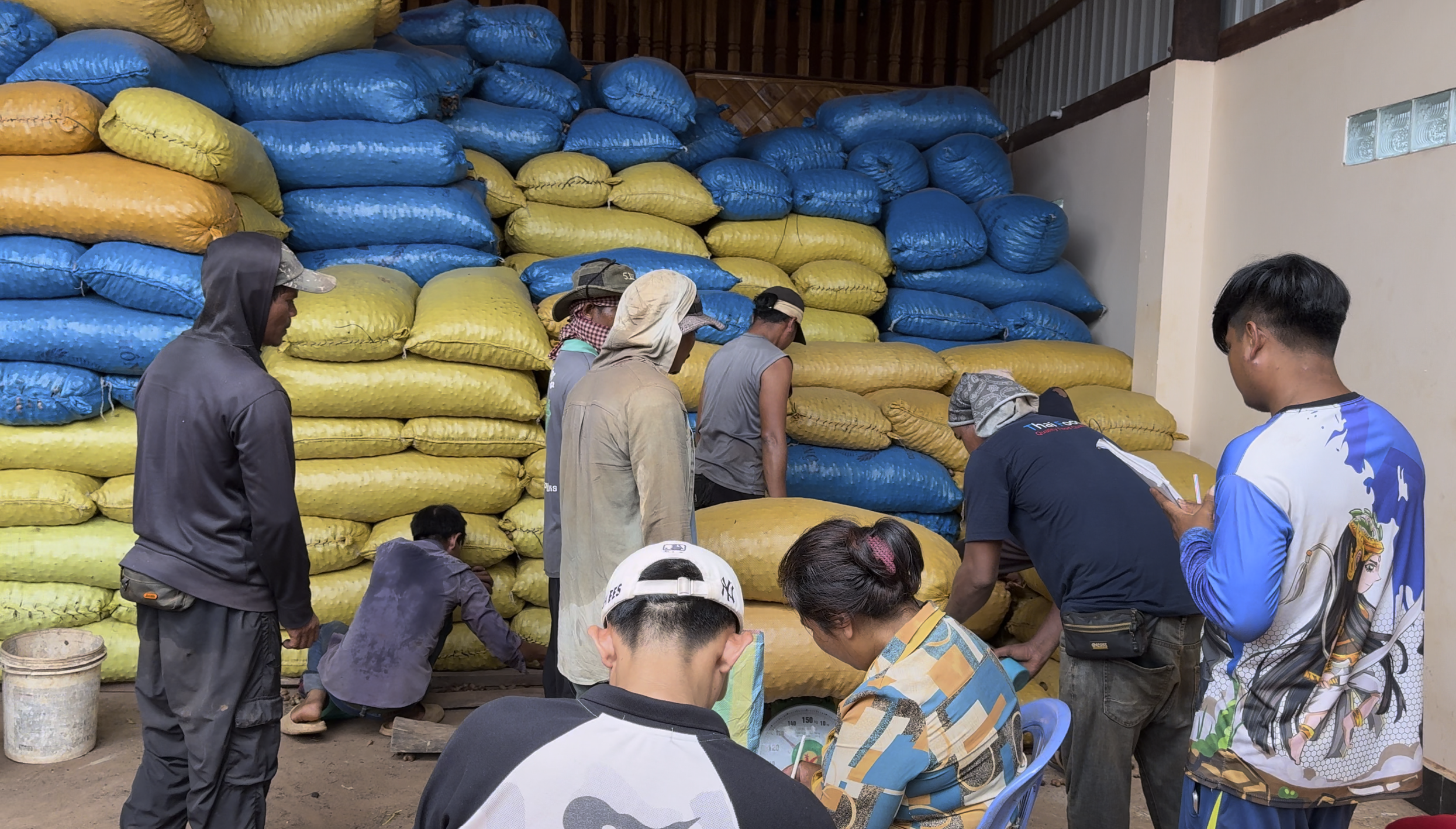
Quality Opens the Door to Markets
During a capacity-building gathering with cooperative members, Mr. Pen Ban shared a simple message: “We produce high-quality cashew nuts; we will have a wide market.”
That message captures the heart of the intervention. Market access is not only about finding buyers. It is about producing what buyers need, in the quality, volume and reliability they require. For rural smallholders, this means technical practices must be linked to business discipline. Harvesting, storage, input use, quality control and cooperative coordination all become part of the same value-chain strategy.
The results are already visible. More than 75 per cent of Chambak Concession Agricultural Cooperative members are now producing to the specifications of the company and the requirements of major local traders. This is a significant step from individual production toward collective market readiness.
Preparing for Modern Cooperative Growth
Mr. Pen Ban is also looking beyond current contracts. He has developed an action plan to help prepare the cooperative for the formation of a Modern Agricultural Cooperative. The plan includes working with nearby agricultural cooperatives, including Samaki Khum Soab Agricultural Cooperative, Svay Chanty Khum Russei Keo Agricultural Cooperative and Svay Chanty Chhroy Banteay Agricultural Cooperative, with the objective of forming a Modern Agricultural Cooperative in 2026.
This ambition is aligned with Cambodia’s wider direction for agricultural modernisation. For ASPIRE-AT, the transition from basic producer organisation support to stronger, more market-oriented and investment-ready cooperatives is central. The objective is not simply to organise farmers, but to help them become capable economic actors that can engage private companies, manage contracts, improve productivity and compete in domestic and export-linked value chains.
Mr. Pen Ban’s plan also sets concrete targets: to encourage at least 65 per cent of Chambak Concession Agricultural Cooperative members to use natural fertilizers and natural pesticides, to establish at least two partnership agreements per year and to secure at least one contract farming agreement per year.
These targets are important because they turn ambition into measurable cooperative discipline. They also show how leadership can connect environmental responsibility, market planning and business growth.
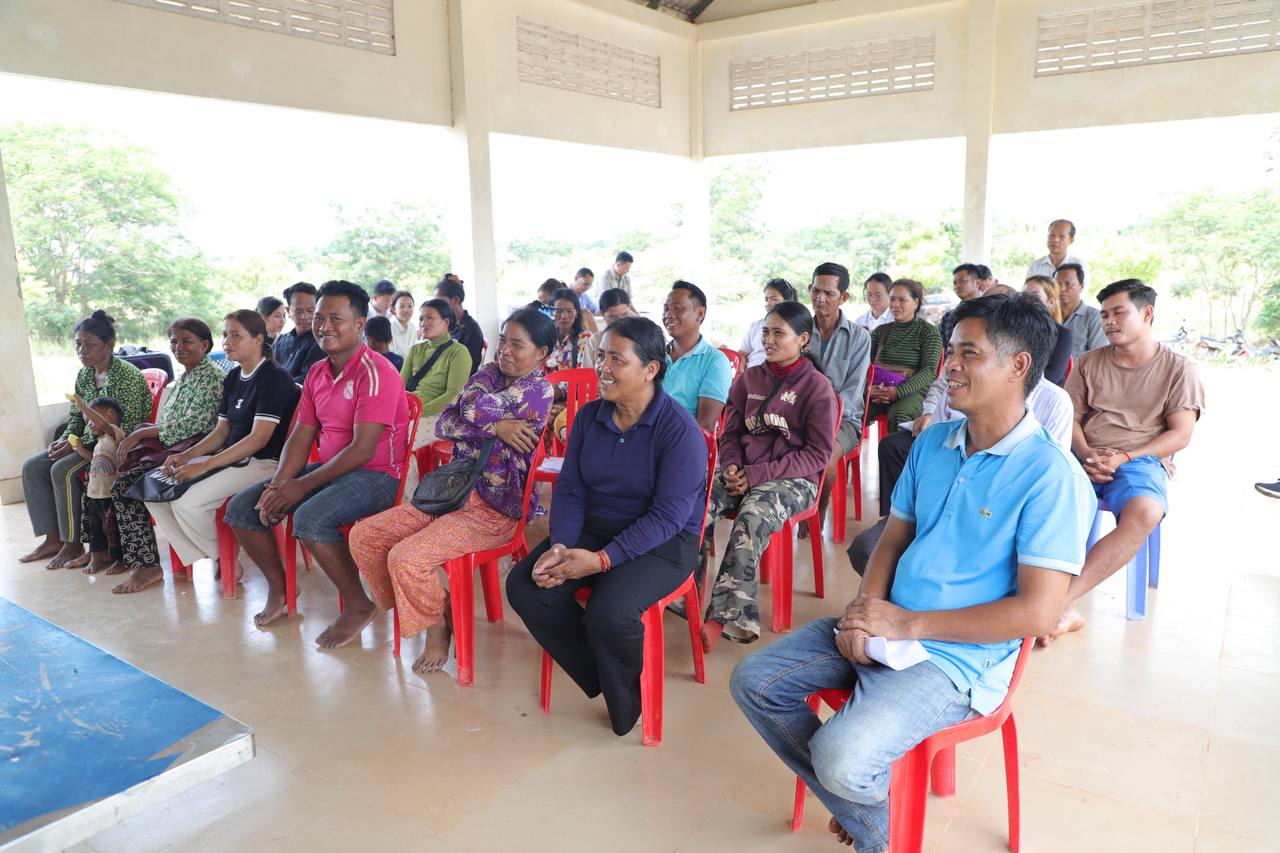
Farmer-to-Farmer Cross Learning Exchange with Wider Value
ASPIRE-AT’s farmer-to-farmer approach works because it builds trust where it matters most: in the field, among farmers, through practical demonstration. When a lead farmer like Mr. Pen Ban explains how to improve quality, reduce chemical inputs, negotiate with buyers and organise harvest management, the advice carries credibility because it comes from experience.
For donors and development partners, this story illustrates the value of investing in human and social capital within rural institutions. Infrastructure, finance and market systems are essential, but they are not enough without local leadership. Rural transformation requires people who can mobilise others, translate technical advice into practice, build trust with buyers and help cooperatives move from participation to performance.
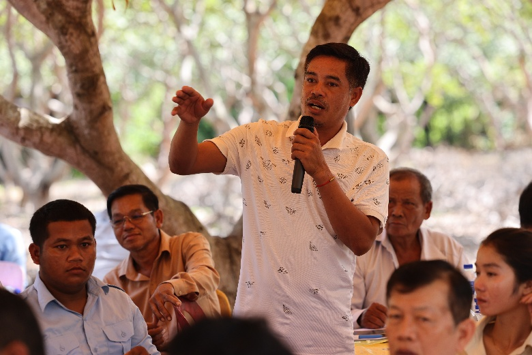
Leadership That Builds Resilience
Mr. Pen Ban’s story is not only about production. It is about how rural smallholders can become more resilient when they are organised, technically equipped and connected to markets. It shows how a cooperative can move beyond selling raw production into managing quality, negotiating contracts and preparing for a more commercial future.
In a period when external shocks are raising the costs of fuel, transport and agricultural inputs, this kind of leadership matters deeply. Natural fertilizer use can reduce exposure to costly inputs. Better quality control can protect market access. Contract farming can improve confidence and planning. Cooperative aggregation can strengthen bargaining power. Farmer-to-farmer learning can spread these practices faster and more credibly than formal instruction alone.
Through ASPIRE-AT, Mr. Pen Ban is helping demonstrate a practical model of inclusive rural transformation: one where rural smallholders are not passive recipients of support, but active builders of better markets, stronger cooperatives and more resilient livelihoods.

Please download the story: https://aspirekh.org/wp-content/uploads/2026/06/Bright-Leadership-Strongerr-Markets-Mr.Pen-Ban_Kratie.pdf